Trees
Baobab Tree Coloring Page
Standard style
About this coloring page
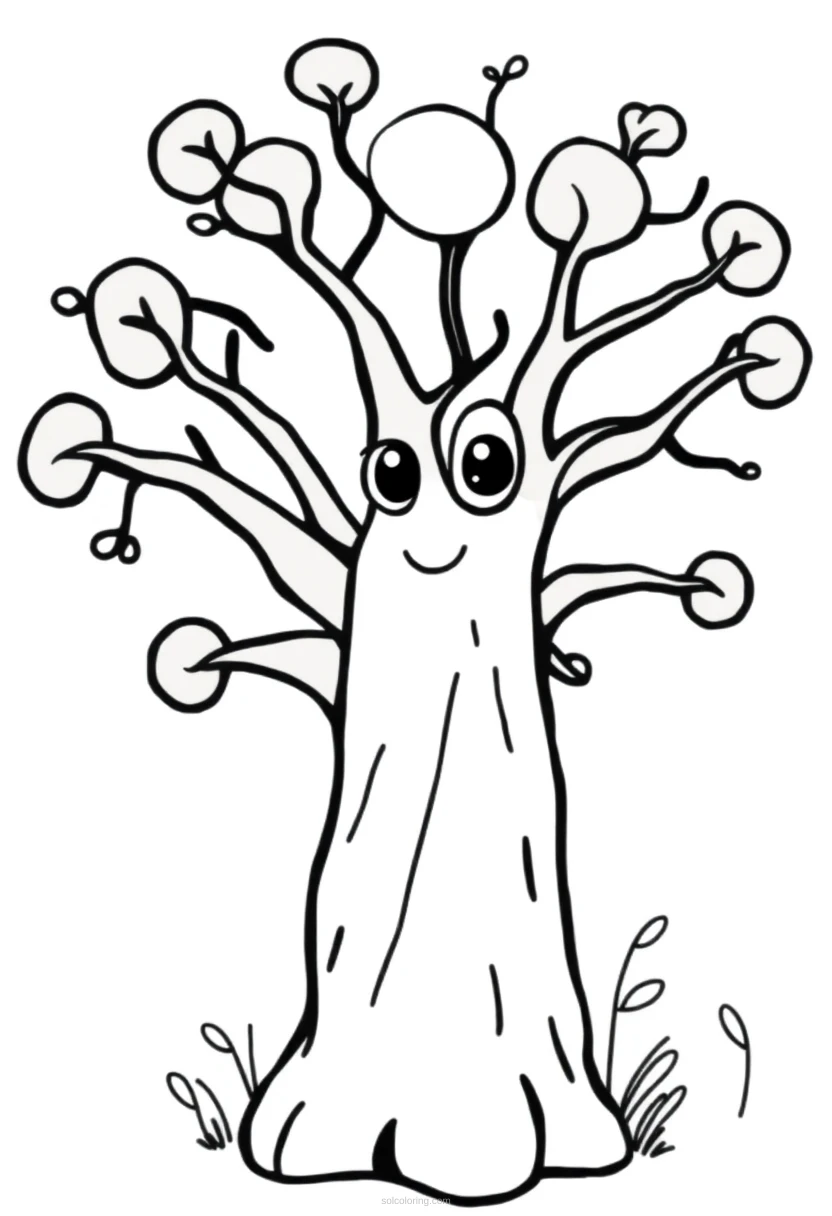
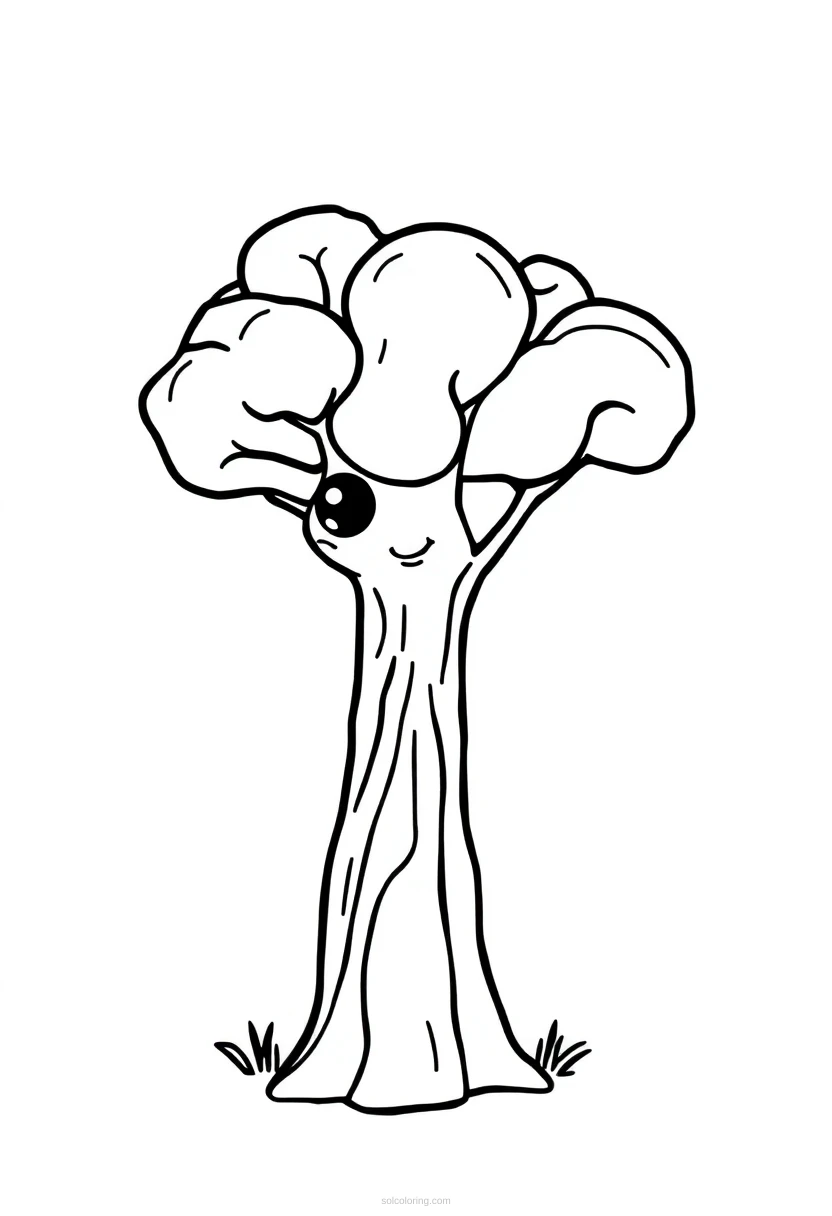
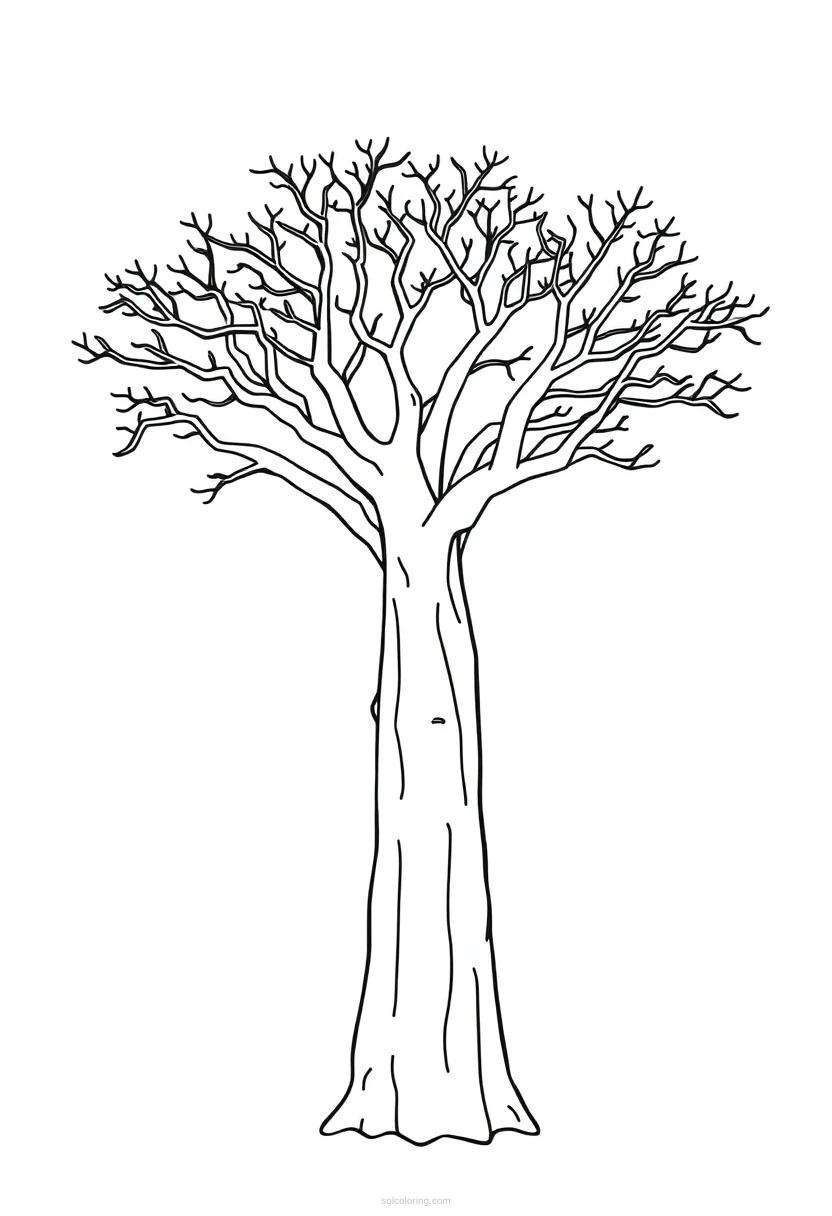
This adorable Baobab Tree coloring page features a friendly cartoon-style African baobab with its iconic thick trunk and spreading branches. The simple design includes bold, clear outlines that make it perfect for young artists and beginners who want to practice their coloring skills while learning about these amazing trees.
Frequently asked
Why is the baobab tree called the 'upside-down tree'?
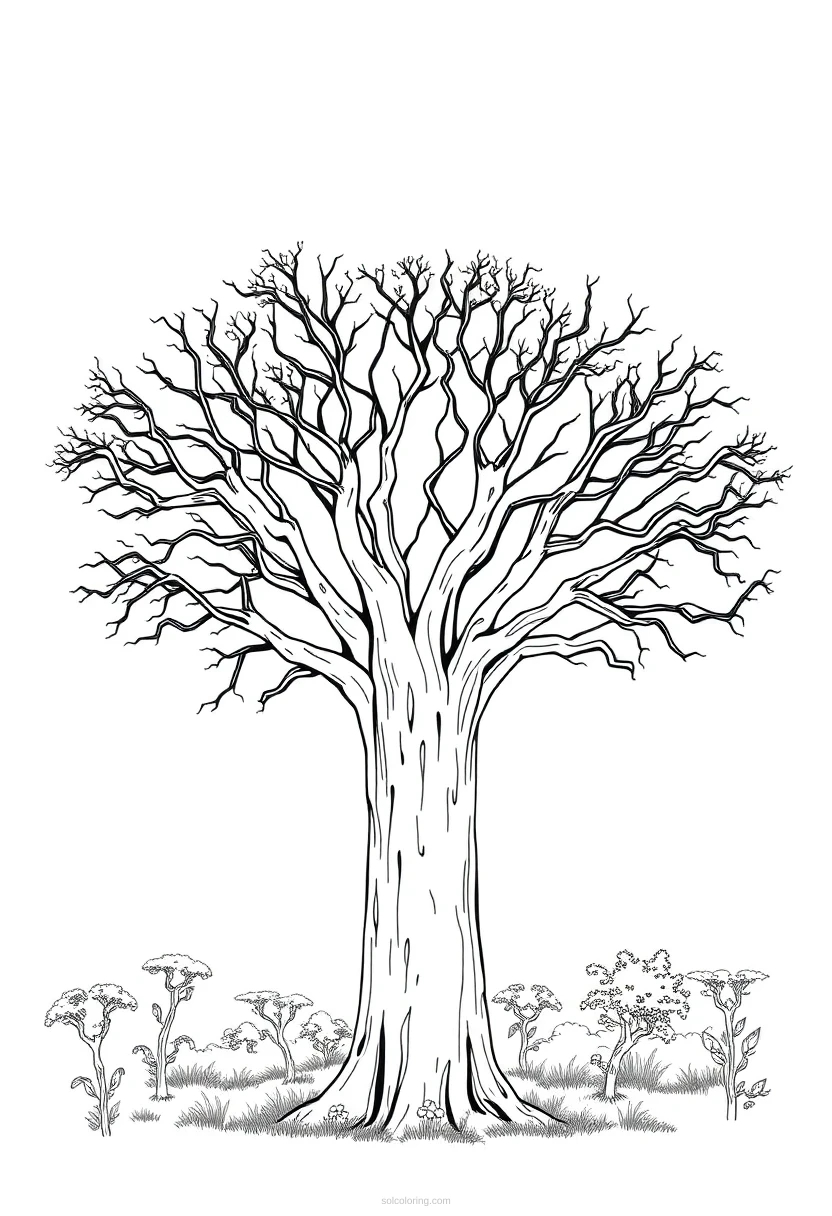
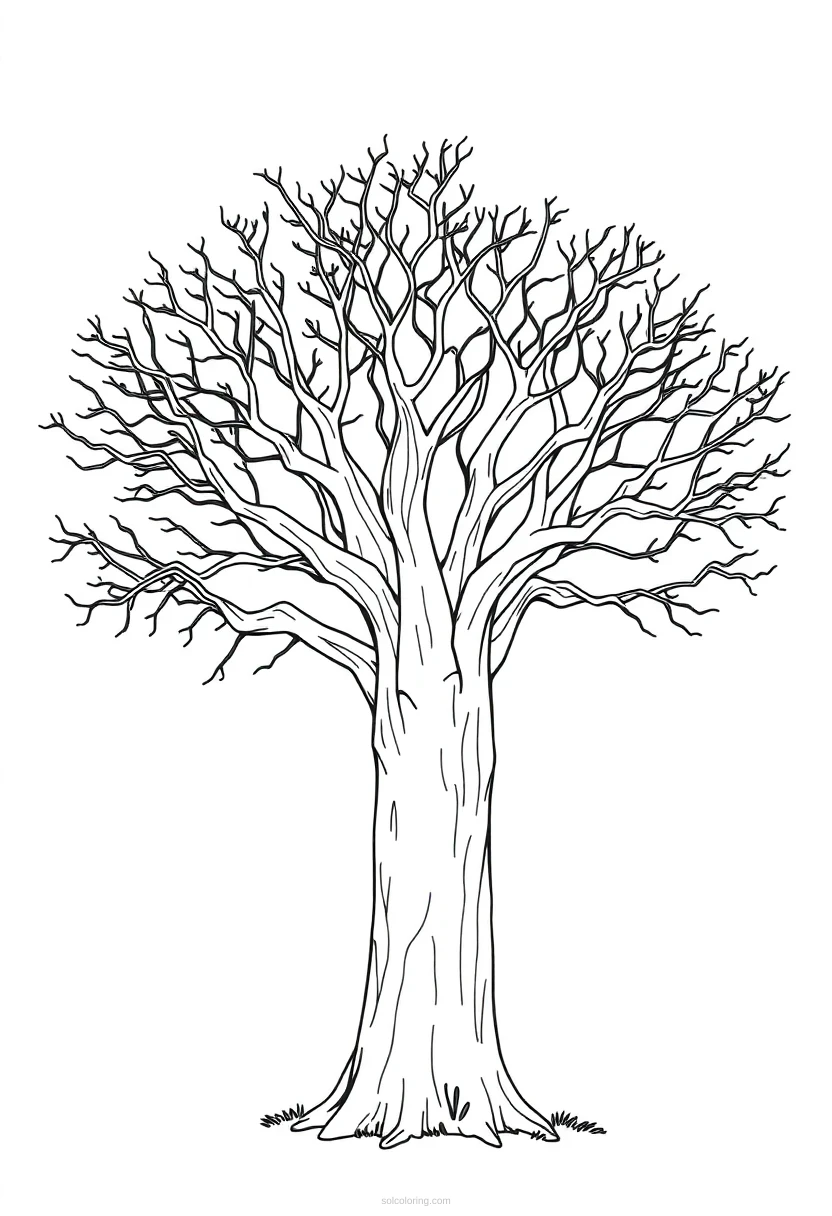
Legend says an angry god threw the baobab tree upside down into the earth as punishment. Scientifically, its branches resemble roots because they're bare most of the year, making it look inverted. The tree's massive trunk and sparse, spreading branches create this remarkable optical illusion that makes baobabs instantly recognizable.
How long can a baobab tree live?
Baobab trees are among Earth's longest-living trees, with some specimens estimated to be over 6,000 years old. These ancient giants grow slowly but steadily, gaining new rings for millennia. Scientists study their rings to learn about past climate patterns and environmental changes across Africa and Australia.
What makes the baobab tree so important to African wildlife and people?
Baobab trees are vital ecosystems that provide food, water, and shelter for countless species. Elephants eat the bark and fruit, birds nest in hollow trunks, and insects pollinate their flowers. Indigenous communities harvest baobab fruit for nutrition, use bark for rope and cloth, and drink water stored in the trunk during dry seasons.
Are these Baobab Tree Cute Cartoon coloring pages free?
Yes, absolutely! All of our Baobab Tree Cute Cartoon coloring pages are completely free to download and print. Simply visit Sol Coloring, select your favorite design, and print directly to your home printer. No signup, no hidden fees, no watermarks. Just pure coloring fun for the whole family.
What age are these Baobab Tree Cute Cartoon coloring pages for?
Our Baobab Tree Cute Cartoon coloring pages are designed for ages 8 and up, with varying difficulty levels. Younger children will enjoy simple designs with larger areas to color, while older kids and teens can tackle more detailed illustrations with intricate patterns and shading opportunities.