Solar System
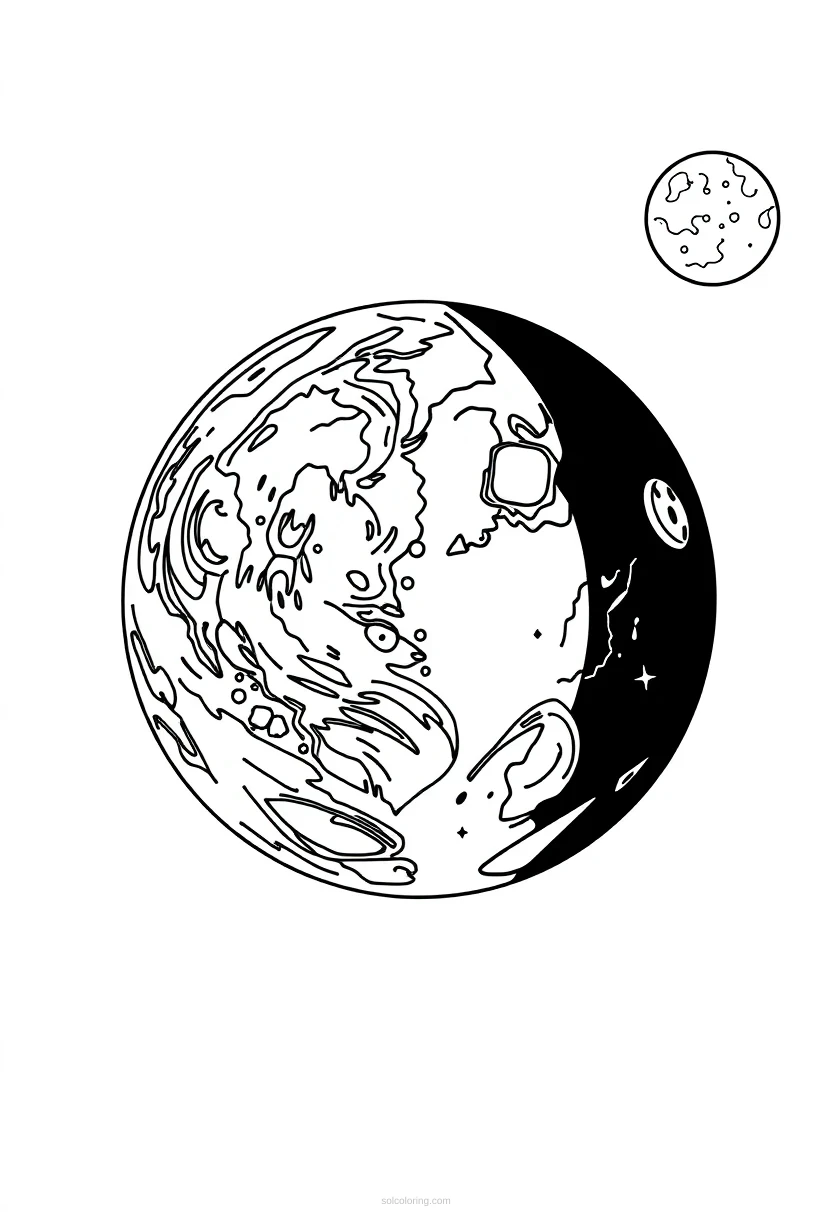
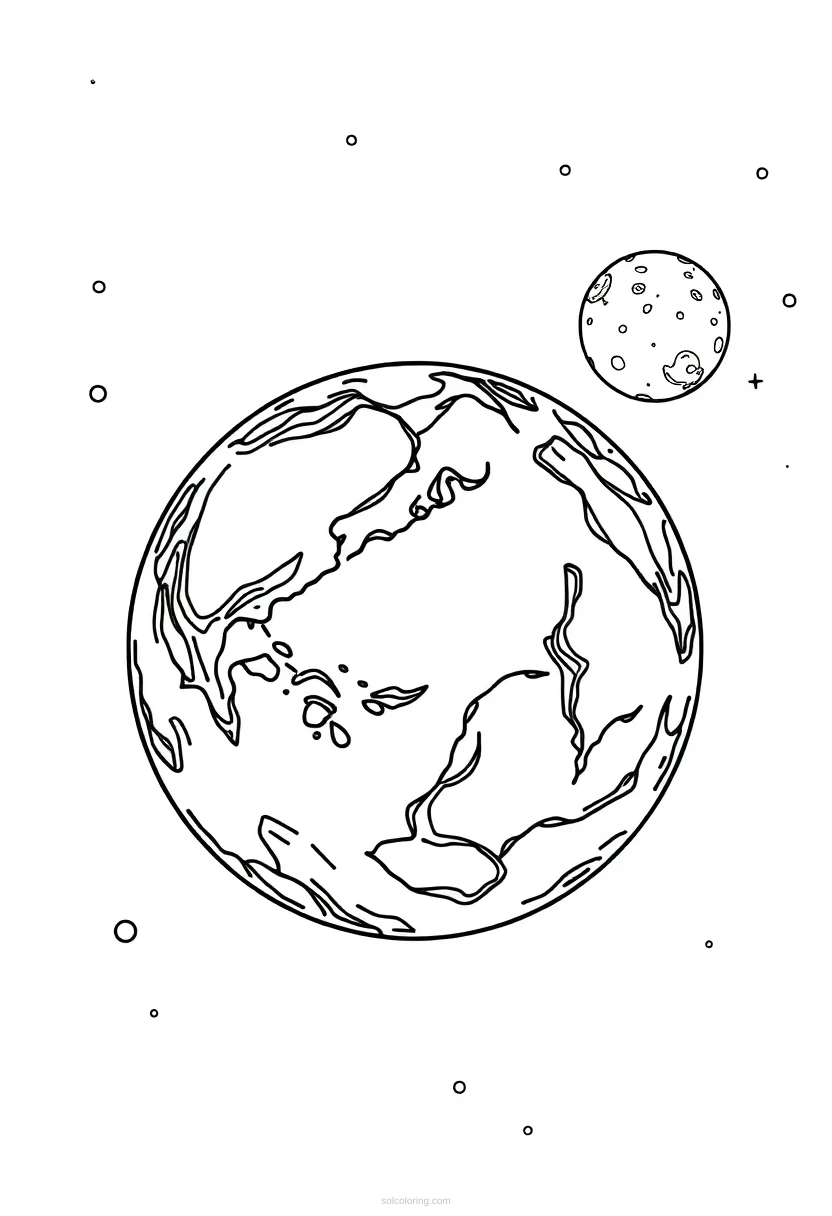
Earth and Moon Coloring Pages
6 free printable designs including Standard, Standard, Standard, Standard and more.
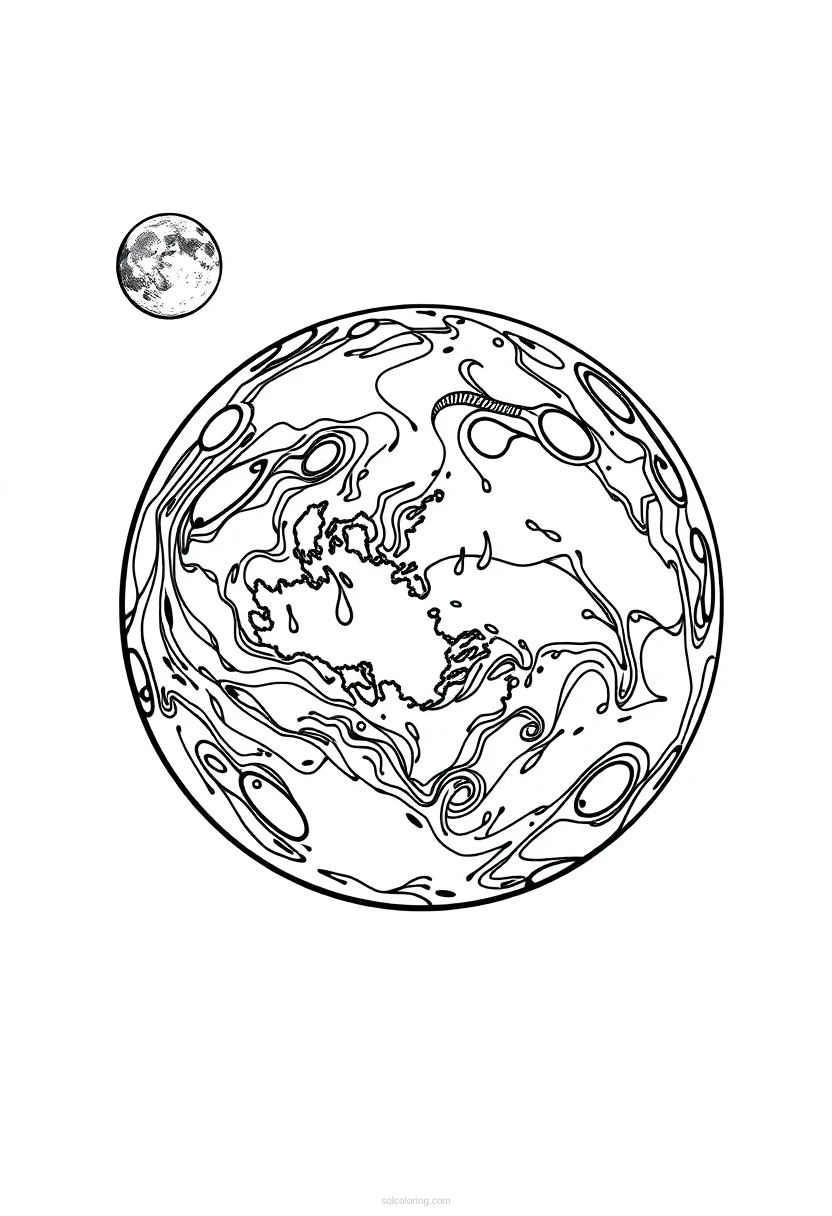
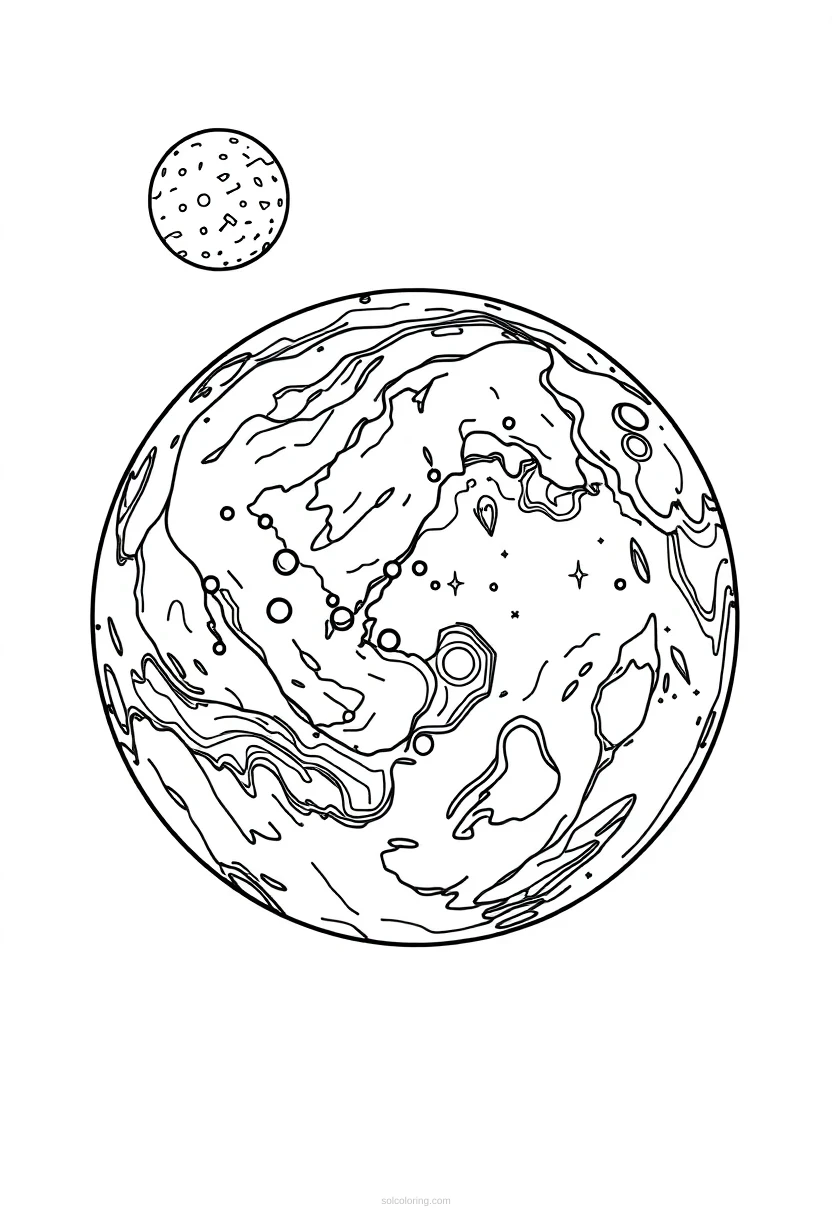
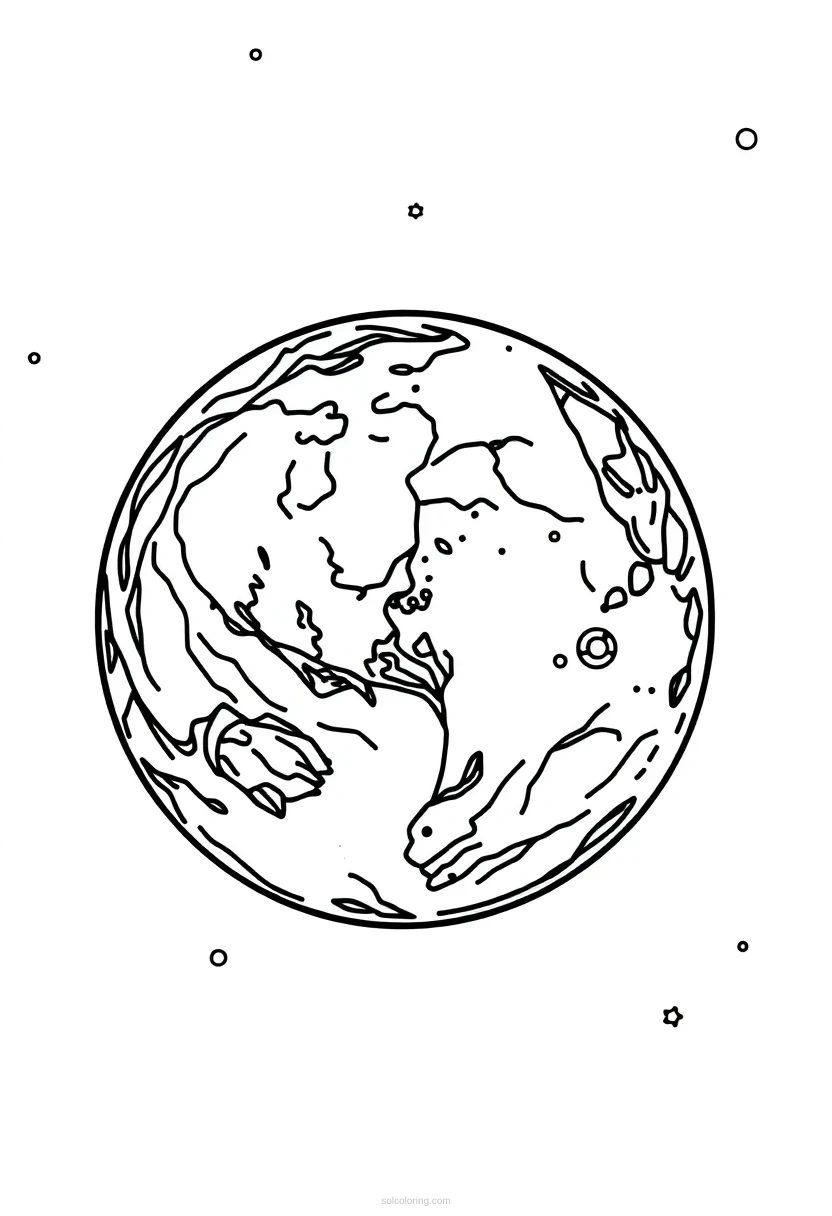
Explore the fascinating relationship between our home planet and its loyal companion with our free printable coloring page featuring Earth and the Moon. This solar system artwork lets you discover how these two celestial bodies dance through space together, locked in an eternal gravitational embrace. Whether you're learning about the Moon's phases, Earth's rotation, or the tides that connect us both, our free printable coloring page makes space science fun and creative. Perfect for curious minds aged 8 to 14, this coloring page combines astronomy with artistic expression in a way that makes cosmic concepts truly come alive.
Read more →Read less ↑
Choose a style
Did you know?
Fun facts about Earth and Moon
The Moon is slowly moving away from Earth at about 1.5 inches (3.8 centimeters) per year, meaning in the distant future, total solar eclipses will no longer be possible.
A day on the Moon lasts about 29.5 Earth days, which is why a lunar month and the Moon's rotation period are the same length.
Earth's moon is the fifth largest moon in our entire solar system, and it's unusually large compared to the planet it orbits.
When the Moon is at perigee (closest to Earth), it can appear up to 14 percent larger and 30 percent brighter than when it's at apogee, a phenomenon sometimes called a supermoon.
The Moon has no atmosphere, so there's no wind or weather to smooth out its surface, which is why craters from impacts billions of years ago remain perfectly preserved.
About Earth and Moon
Why does the Moon always show us the same face?
The Moon is tidally locked to Earth, meaning it rotates at exactly the same speed it orbits around us. This synchronization takes about 27.3 days for both rotation and orbit, causing the same hemisphere to always face Earth. This is why we never see the Moon's far side from our planet's surface.
How do the Moon and Earth create tides?
The Moon's gravity pulls on Earth's oceans, creating bulges of water on the side facing the Moon and the opposite side. As Earth rotates beneath these bulges, coastal areas experience high and low tides roughly twice daily. The Sun's gravity also influences tides, making them stronger during full and new moons.
What is the Moon made of?
The Moon consists primarily of rock and dust, similar to Earth's crust. Its surface is covered with craters from asteroid impacts, dark regions called maria, and bright highlands. Scientists discovered water ice in permanently shadowed craters near the Moon's poles, which could support future lunar exploration.
How far away is the Moon from Earth?
The Moon orbits approximately 238,900 miles or 384,400 kilometers from Earth on average. This distance isn't constant because the Moon's orbit is slightly elliptical. When it's closest, called perigee, it's about 226,000 miles away, and when farthest, called apogee, it's about 252,000 miles away.
Why does the Moon change shape throughout the month?
The Moon doesn't actually change shape, but our view of its sunlit side does as it orbits Earth. These changes are called lunar phases. Starting with the new moon, when the Moon is between Earth and Sun, it gradually becomes more visible as a crescent, then a half moon, then full moon, before repeating the cycle.
What would happen if the Moon disappeared?
Without the Moon, Earth would experience dramatic changes. Tides would nearly vanish, affecting ocean ecosystems and coastal climates. Earth's rotation would gradually slow, making days much longer. The Moon also stabilizes Earth's axial tilt, which regulates our seasons and climate, so losing it would create chaotic environmental conditions.
More Solar System coloring pages
Coloring page FAQs
Are these Earth and Moon coloring pages free?
Yes, absolutely! All our Earth and Moon free printable coloring pages are completely free to download and print. No subscription, no hidden fees, and no signup required. Simply visit our website, select your favorite design, and start coloring right away from the comfort of your home.
What age are these Earth and Moon coloring pages for?
Our Earth and Moon coloring pages are designed for ages 8 to 14, with varying difficulty levels. Younger children enjoy simpler line work and larger spaces to color, while older kids appreciate more detailed planetary features and intricate designs that challenge their fine motor skills.
How do I print these Earth and Moon coloring pages?
Printing is simple and hassle-free. Download the PDF file to your computer, then open it with any PDF reader. Select your paper size, A4 or Letter, adjust settings as needed, and print directly to your home printer. No special equipment or technical knowledge required.