Fruit
Strawberry Patch Coloring Page
Standard style
About this coloring page
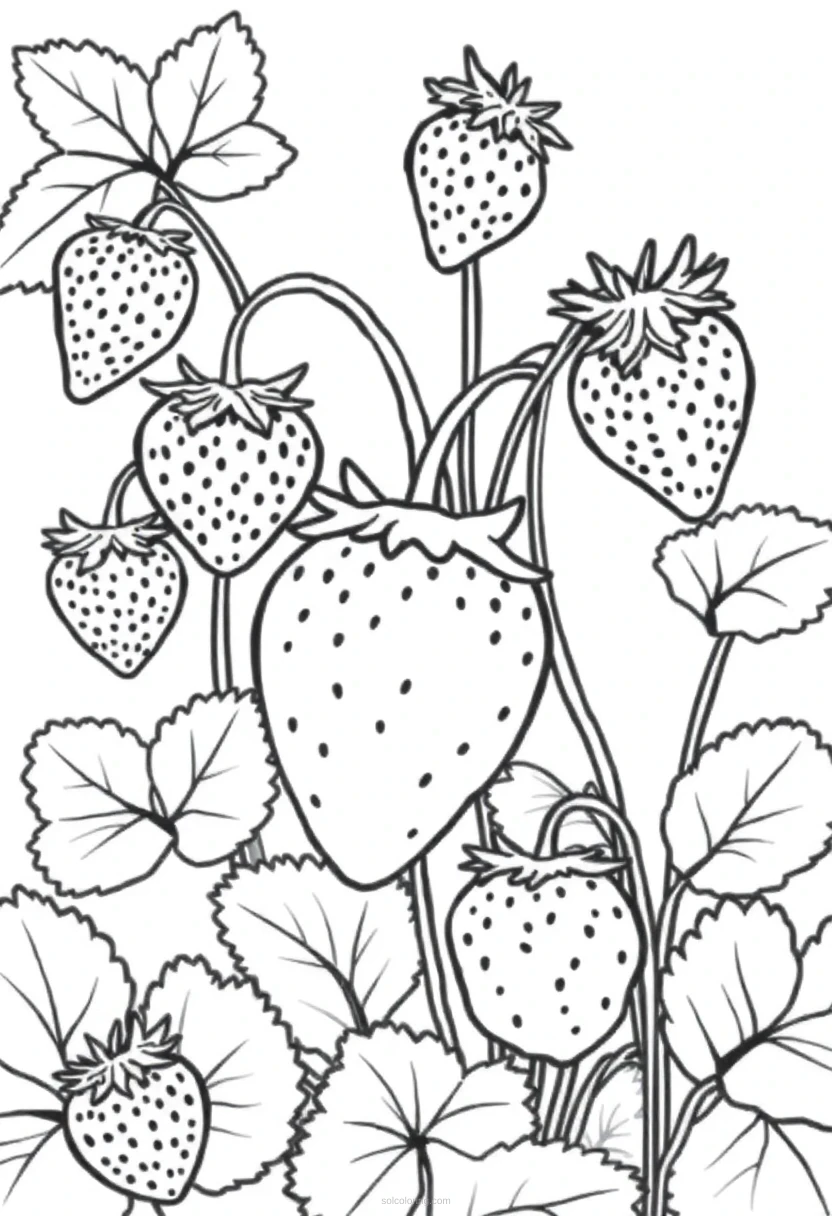
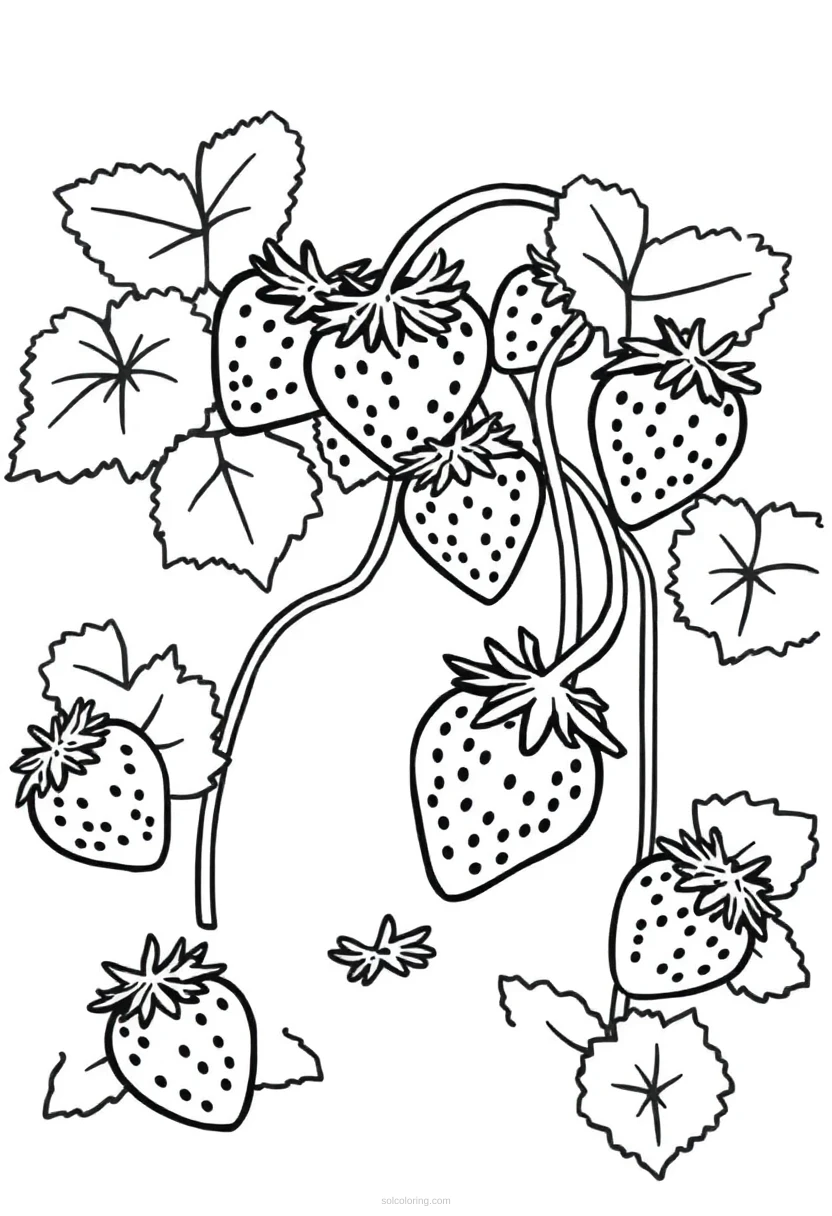
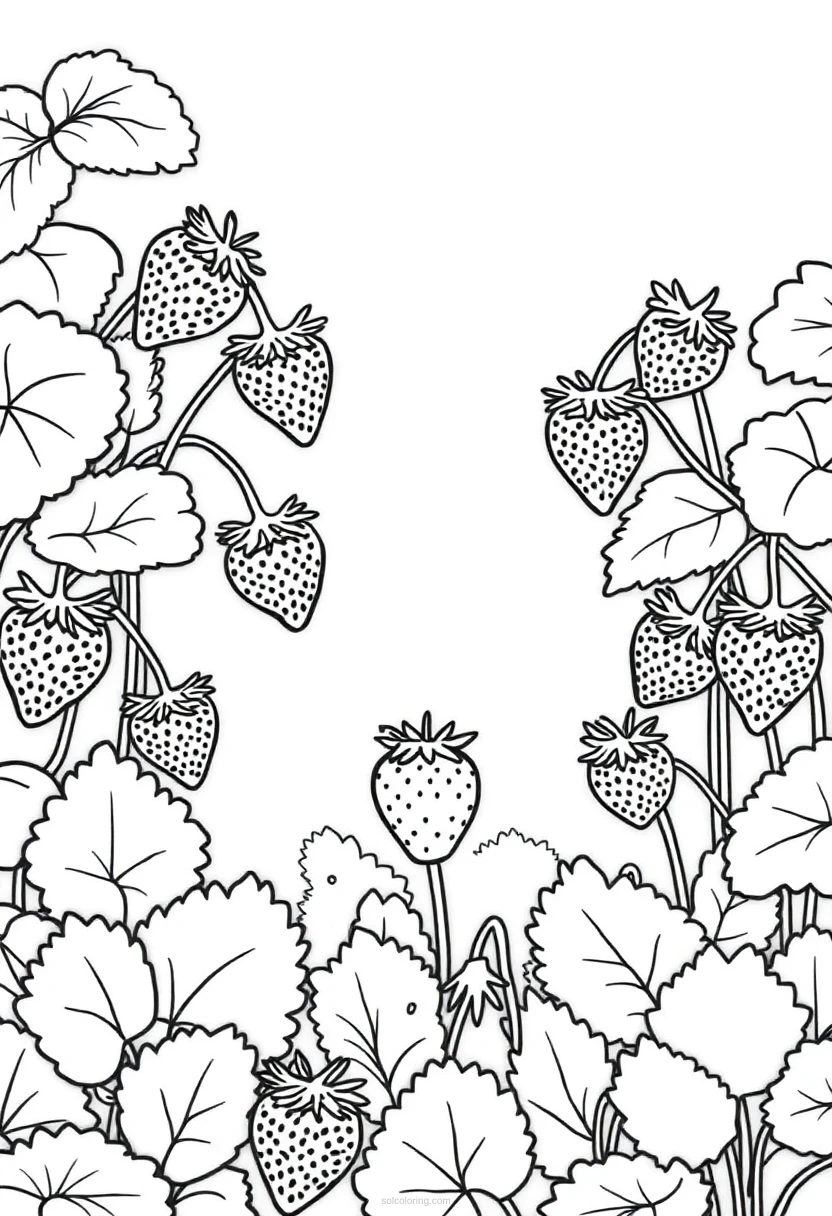
This delightful Strawberry Patch coloring page features rows of plump strawberry plants with detailed leaves, flowers, and juicy berries ready to pick. The design includes bold, clear outlines perfect for all skill levels, from young children learning to color to adults seeking a relaxing activity. Free to download and print, this fruit-themed coloring page captures the charm of a sunny strawberry garden.
Frequently asked
How do strawberries grow in a patch?
Strawberries grow from low-lying plants that spread along the ground using runners, or stolons. These runners create new plants that eventually produce flowers and bright red fruits. A mature strawberry patch can have dozens of plants clustered together, creating a dense, productive growing area perfect for harvesting fresh strawberries.
What makes strawberries red and sweet?
Strawberries turn red as they ripen, developing natural sugars that make them sweet and delicious. The red color comes from anthocyanin pigments that also indicate ripeness. A fully ripe strawberry will be bright red throughout, sweet to the taste, and packed with more vitamin C than an orange of similar size.
How long does it take to grow strawberries?
From planting to first harvest, strawberries typically take about 4 to 6 weeks to produce fruit. However, establishing a healthy patch that produces abundant berries takes planning. Spring-planted strawberries often produce their first crop in early summer, with peak production continuing through late summer and early fall.
Are these Strawberry Patch coloring pages free?
Yes! All of our Strawberry Patch coloring pages are completely free to download and print. Simply visit Sol Coloring, select the design you love, and print it instantly on standard A4 or Letter paper. No subscription, registration, or hidden costs required.
What age are these Strawberry Patch coloring pages for?
Our Strawberry Patch coloring pages are designed for ages 8 to 14, with varying complexity levels. Younger kids can enjoy simple outlines and large spaces, while older children can challenge themselves with detailed patterns and intricate designs perfect for developing fine motor skills.