Historical Eras Scenes
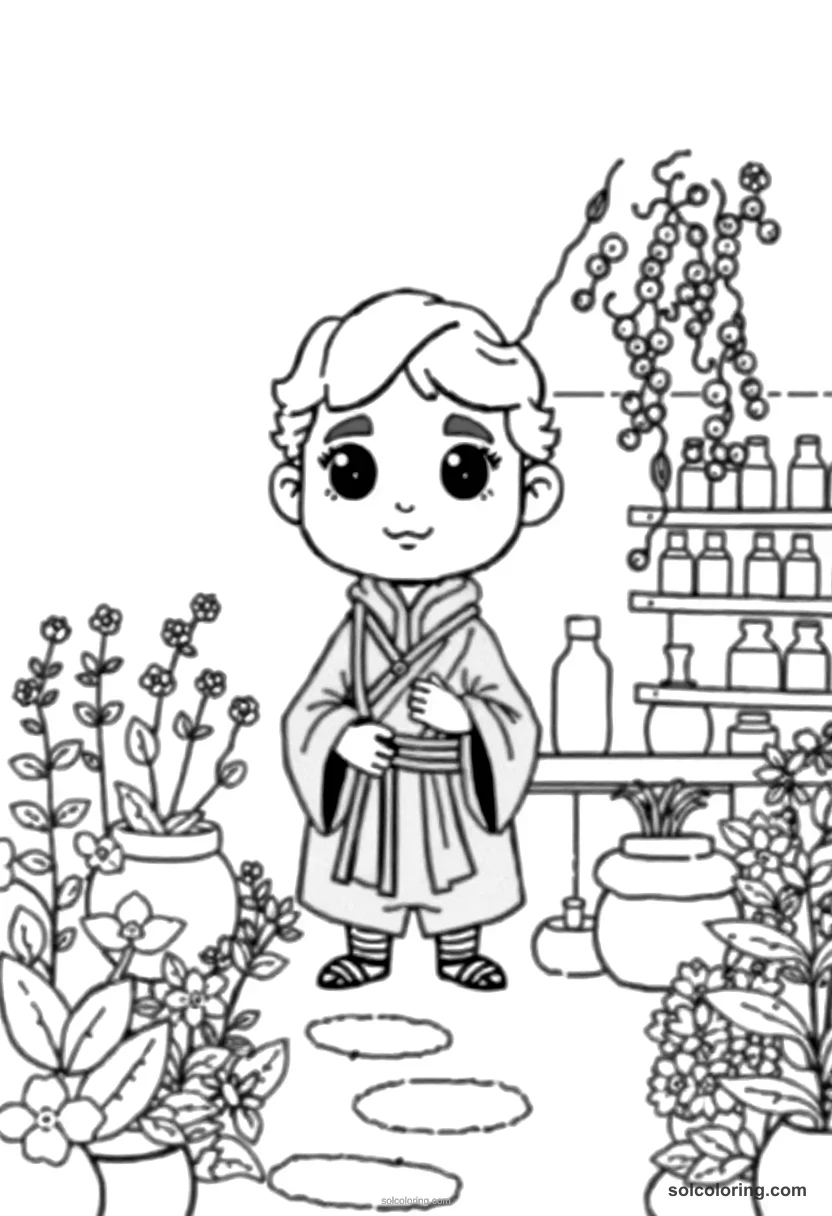
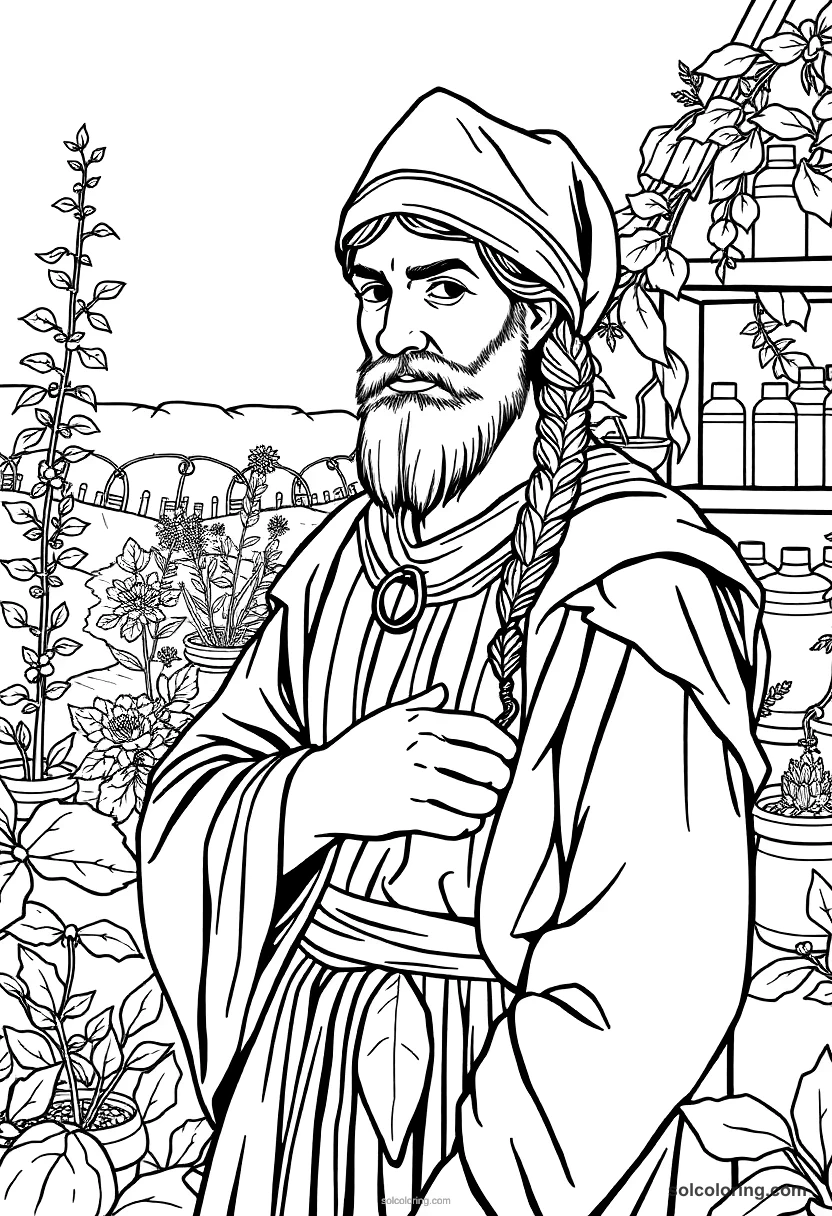
Medieval Herbalist Garden and Apothecary Coloring Page
Realistic style
About this coloring page
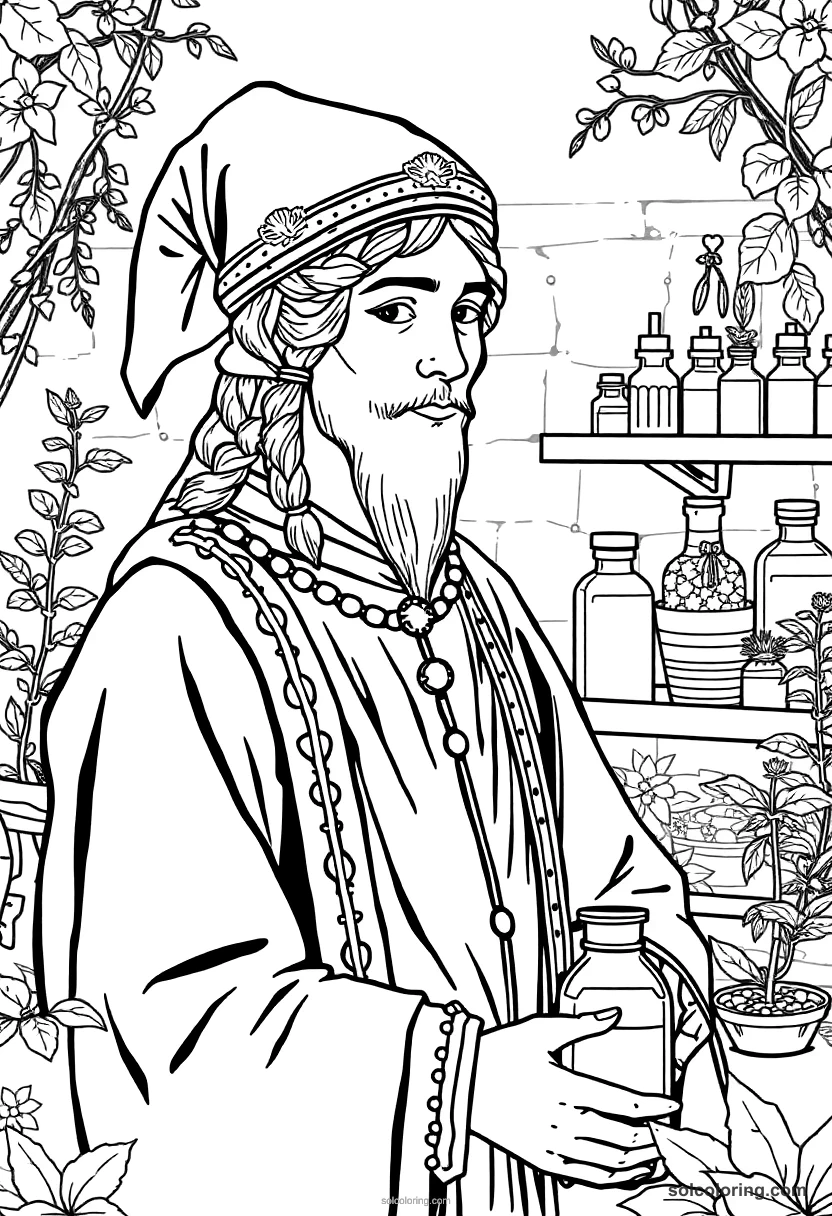
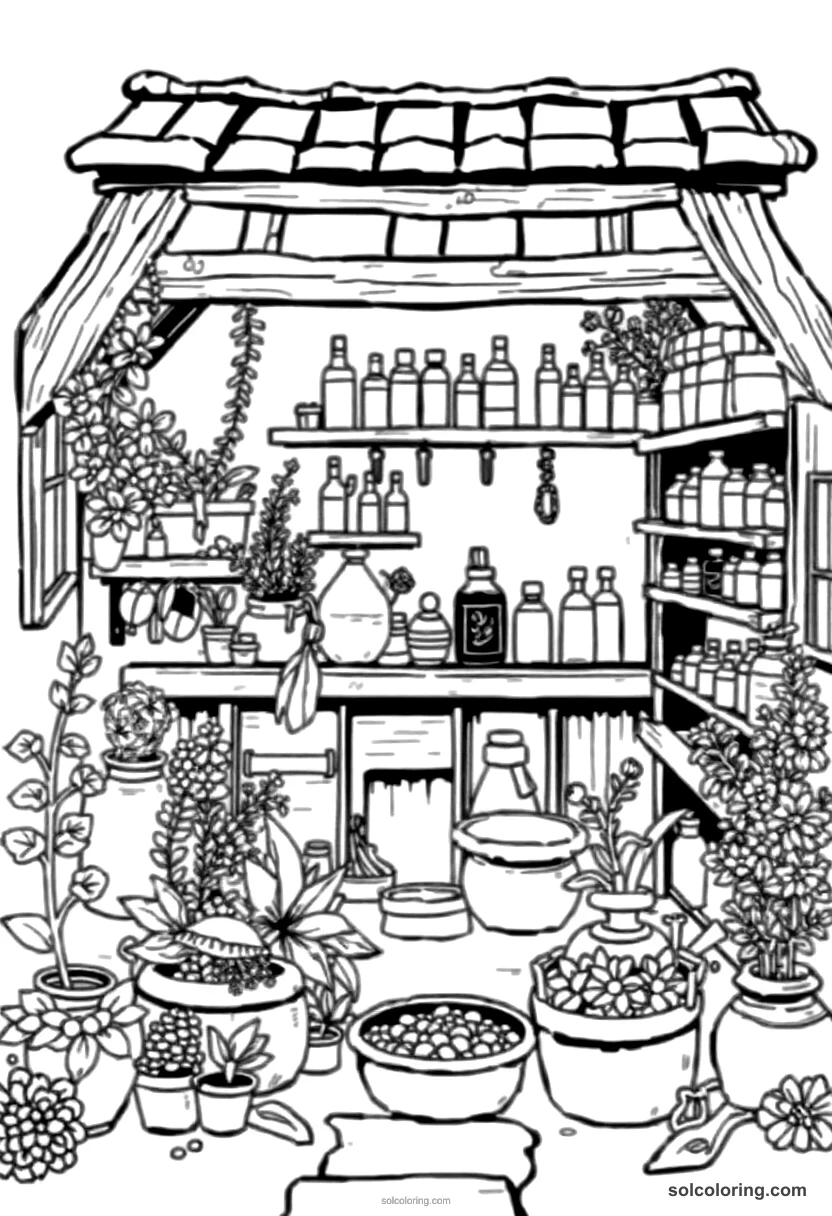
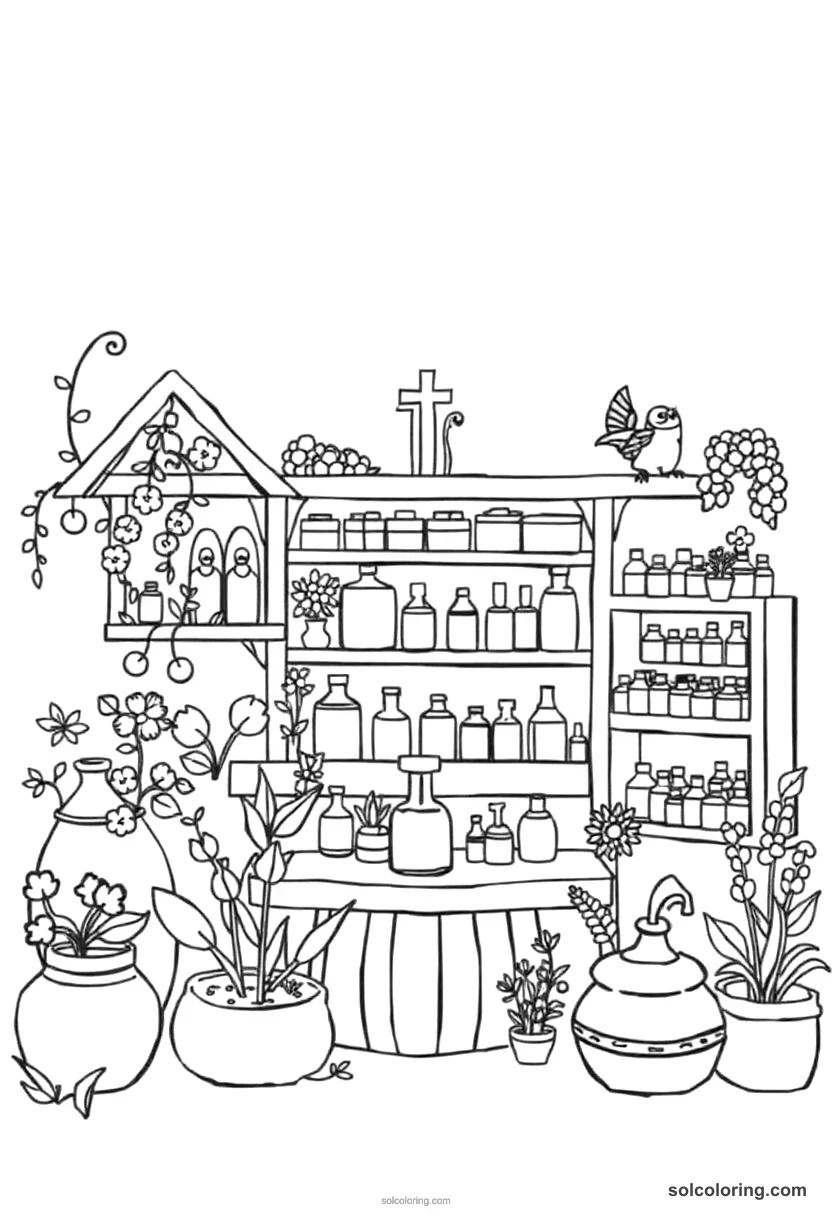
This Medieval Herbalist Garden and Apothecary coloring page features a detailed scene of a medieval healer's workspace, complete with herb gardens, bottles of remedies, mortar and pestle, and hanging dried plants. The free printable design includes bold outlines perfect for intermediate to advanced colorists who enjoy historical themes and intricate botanical details.
Frequently asked
What plants did medieval herbalists grow in their gardens?
Medieval herbalists cultivated over 500 medicinal plants including lavender for headaches, willow bark for pain relief, and foxglove for heart conditions. They also grew culinary herbs like thyme, sage, and parsley that doubled as medicines for digestive problems.
How did medieval apothecaries organize their medicines?
Apothecaries stored herbs in labeled ceramic jars called albarelli, hung dried plants from rafters, and kept precious ingredients in locked wooden chests. They used complex symbols and Latin names to identify different remedies and their uses.
What tools did medieval herbalists use to make medicines?
Herbalists used marble mortars and pestles to grind herbs, copper stills for making essential oils, and brass scales for precise measurements. They also employed special knives for harvesting plants at optimal times and wooden presses for extracting juices.
Are these Medieval Herbalist Garden And Apothecary coloring pages free?
Yes! All our Medieval Herbalist Garden And Apothecary coloring pages are completely free to download and print. No hidden fees or subscriptions required.
What age are these Medieval Herbalist Garden And Apothecary coloring pages for?
These pages are designed for ages 8-14, with varying detail levels. Younger kids can enjoy simpler elements while teens can tackle intricate herb garden details.