Words
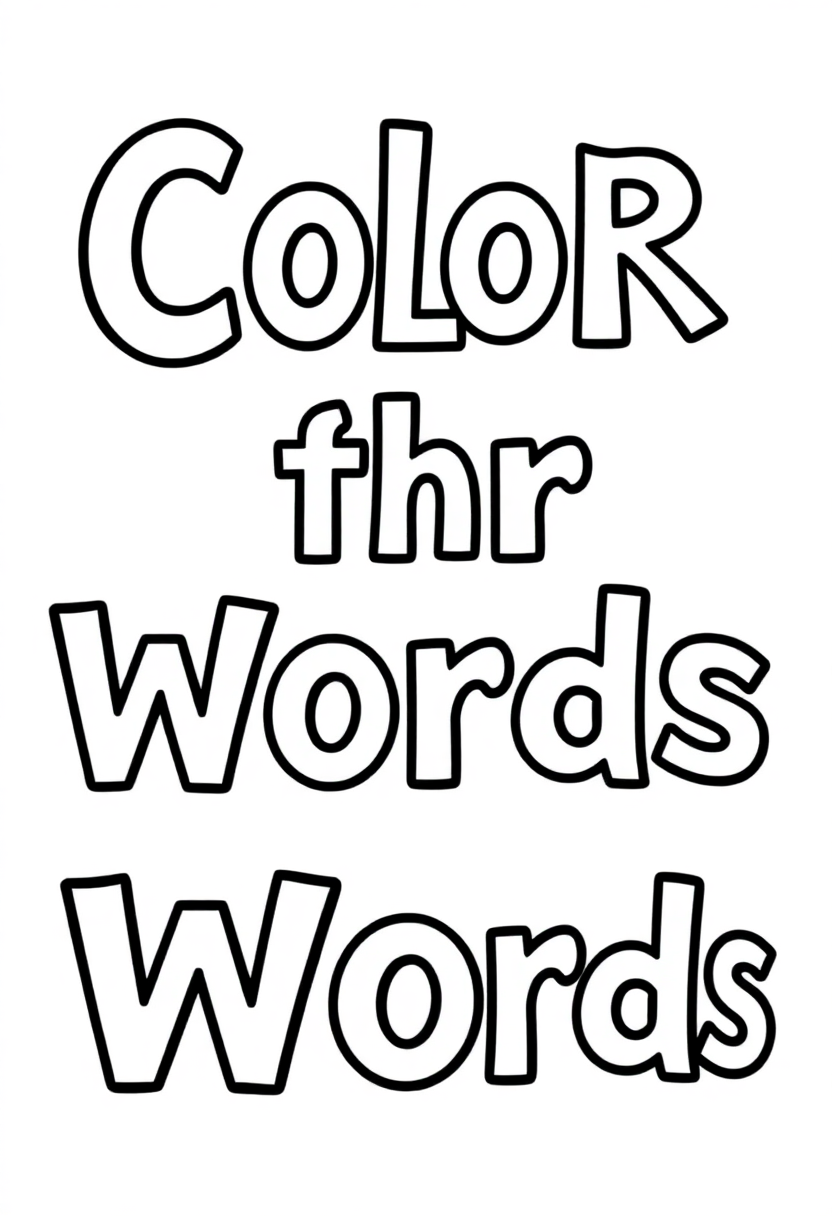
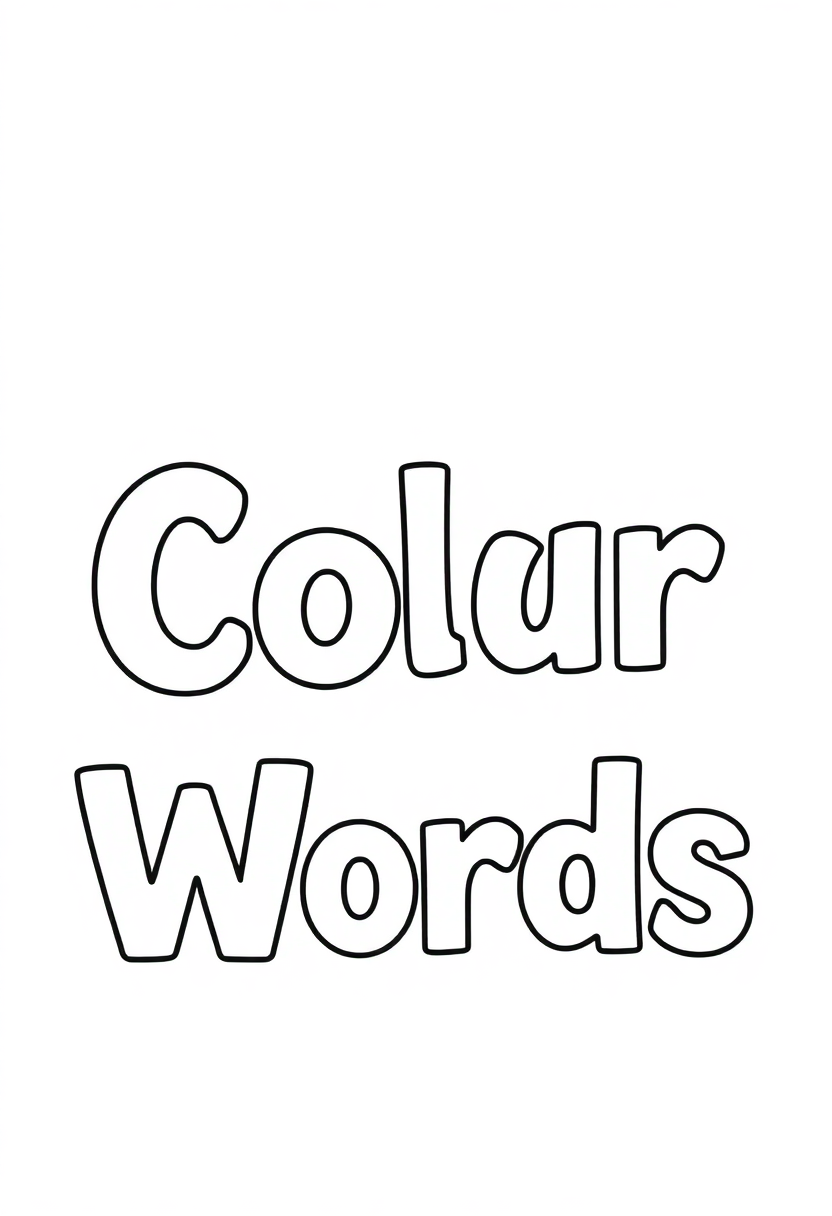
Color Words Coloring Pages
6 free printable designs including Standard, Standard, Standard, Standard and more.
Color Words are a fun and educational way to learn vocabulary while exploring the rich spectrum of hues that surround us every day. From basic colors like red and blue to more sophisticated shades like crimson, turquoise, and magenta, understanding color words helps expand your language skills and appreciation for visual details. Our free printable coloring pages combine the joy of coloring with word recognition, making them perfect for building spelling and reading confidence. Whether you're discovering new color names or reinforcing familiar ones, these free printable coloring page activities turn learning into a creative adventure that's perfect for artists of all ages.
Read more →Read less ↑
Choose a style
Did you know?
Fun facts about Color Words
The color orange is the only common English color word that doesn't rhyme with any other word in the English language.
Before the 1600s, English didn't have a specific word for the color orange; oranges were simply called 'yellow-red' or 'saffron.'
Different languages have emerged with entirely new color words as technology evolved, such as 'neon' and 'metallic' becoming standard color descriptors.
The ancient Romans only had words for red, yellow, black, and white, and gradually added more color names as their culture developed.
Some color words like 'indigo' and 'magenta' actually come from the places where those dyes originated or the scientists who discovered them.
About Color Words
Why is learning color words important for language development?
Color words are among the most fundamental descriptive vocabulary children learn, helping them communicate more precisely about the world around them. Learning colors teaches pattern recognition and expands descriptive abilities. Studies show that children who learn diverse color vocabulary earlier develop stronger overall language skills and better observation abilities in reading and writing.
How many colors can humans actually see and name?
Humans can distinguish millions of individual colors, but most languages have words for only a few dozen primary colors. English has about 750 named colors, though some people can distinguish between 10 million different hues. Interestingly, cultures that have fewer color words in their language perceive colors differently than those with extensive color vocabularies.
What's the difference between color and shade, tint, and tone?
While color is the basic hue itself, a shade is made by adding black to darken a color, a tint is made by adding white to lighten it, and a tone is made by adding gray to mute it. Understanding these distinctions helps artists and designers create more nuanced palettes. Learning these terms alongside basic color names deepens your appreciation for artistic color choices.
Why do different cultures name colors differently?
Color naming varies across cultures based on history, environment, and language development. Ancient Greek had no word for blue, and some languages only distinguish between warm and cool colors. Cultural priorities shape vocabulary: societies surrounded by snow may have multiple words for white, while tropical cultures might have more terms for shades of green and blue.
How do artists and designers use color words in their work?
Professionals use specific color terminology to communicate precisely about their work and ensure consistency across projects. Terms like cerulean, chartreuse, and sienna allow artists to describe exact shades without relying on visual reference. Fashion designers, interior decorators, and graphic designers rely on standardized color names and systems to translate their vision into physical reality.
Are color names universal across languages?
No, color names vary significantly between languages and cultures. The same color might be called by completely different names in different languages. For example, orange as a color didn't have its own English word until the fruit became popular. Learning color words in different languages reveals how each culture perceives and prioritizes colors uniquely.
More Words coloring pages
Coloring page FAQs
Are these Color Words coloring pages free?
Absolutely! All of our Color Words coloring pages are completely free to download and print. There are no hidden fees, subscriptions, or sign-ups required. Simply visit solcoloring.com, find the Color Words page you like, and print it directly from your browser whenever you're ready to create.
What age are these Color Words coloring pages for?
These Color Words coloring pages are designed for ages 8 to 14, with varying complexity levels. Younger children can enjoy simple color names and large letters, while older kids can tackle more challenging vocabulary and detailed designs. The combination of coloring and word learning appeals to different skill levels.
How do I print these Color Words coloring pages?
Printing is simple and straightforward. Open the Color Words page on solcoloring.com, click the print button, and select your preferred paper size (A4 or Letter). No special software or signup is needed. You can print from any home printer or take the file to a local printing service.