Greek
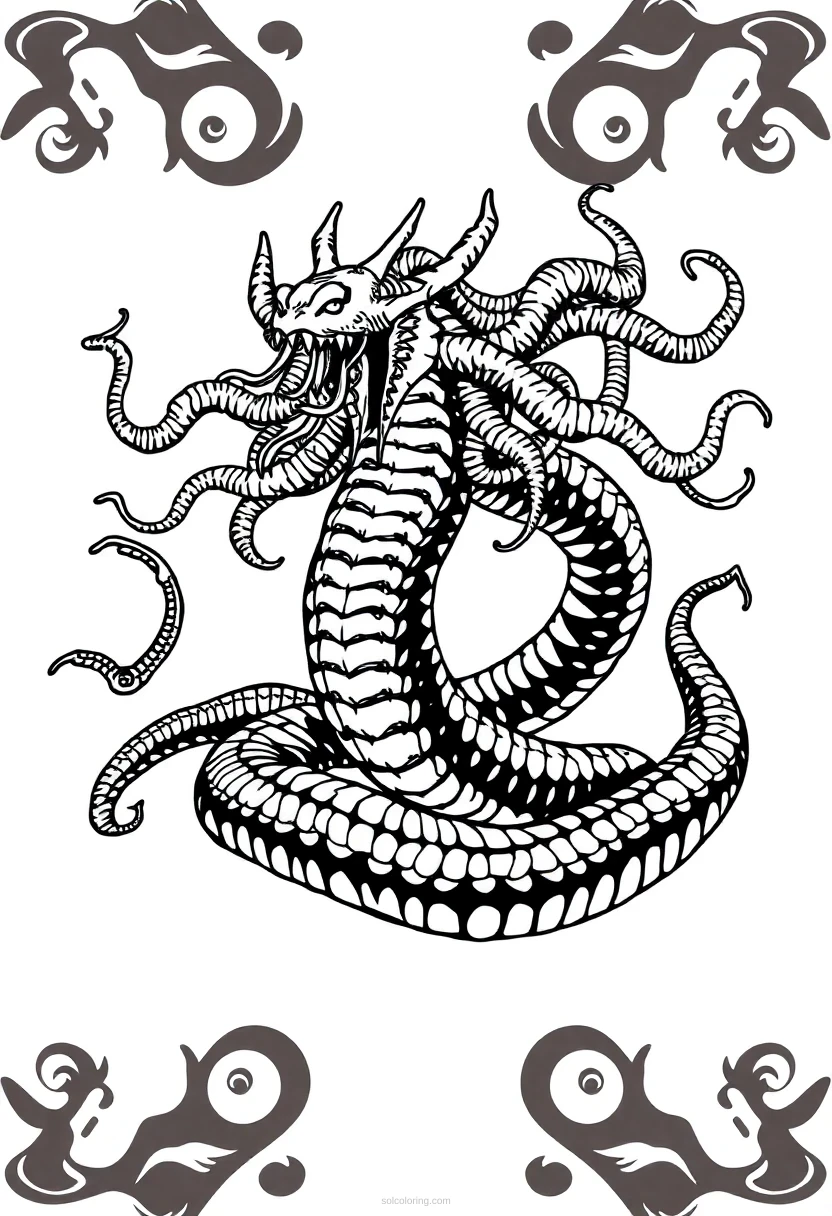
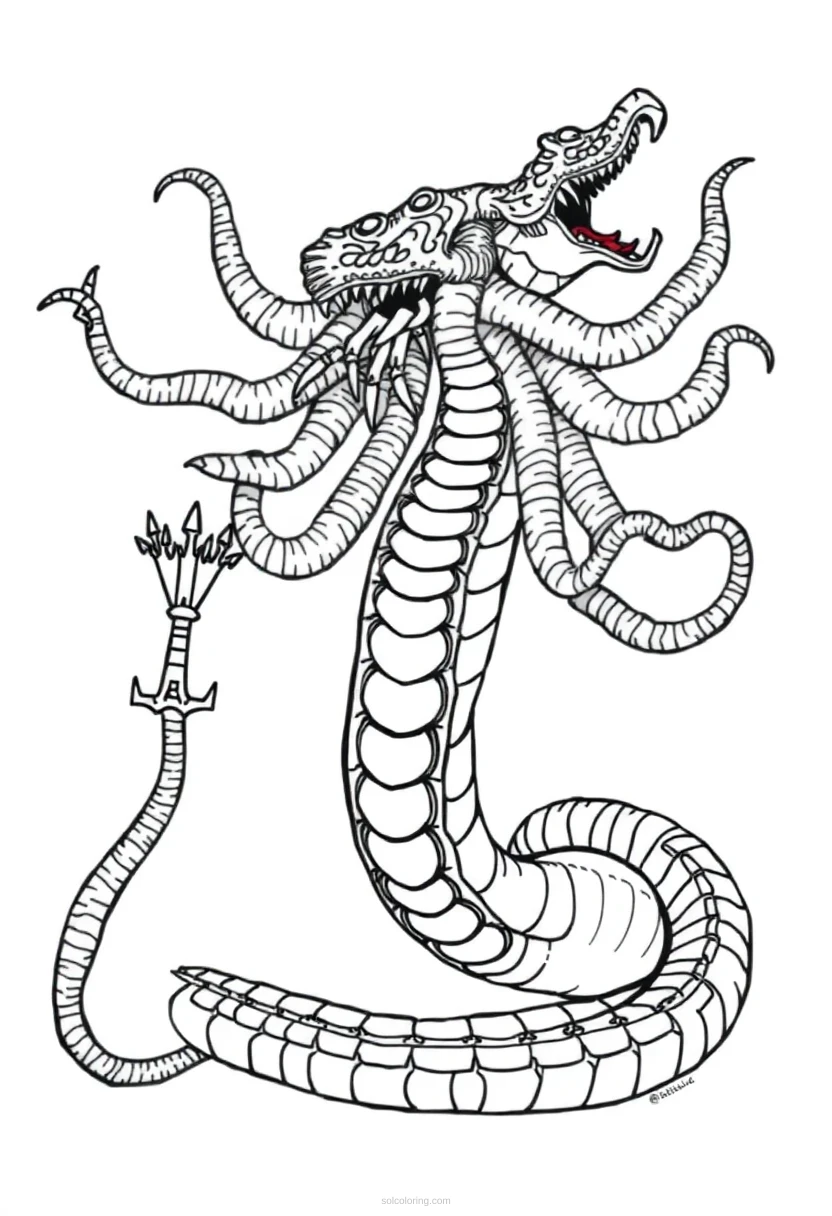
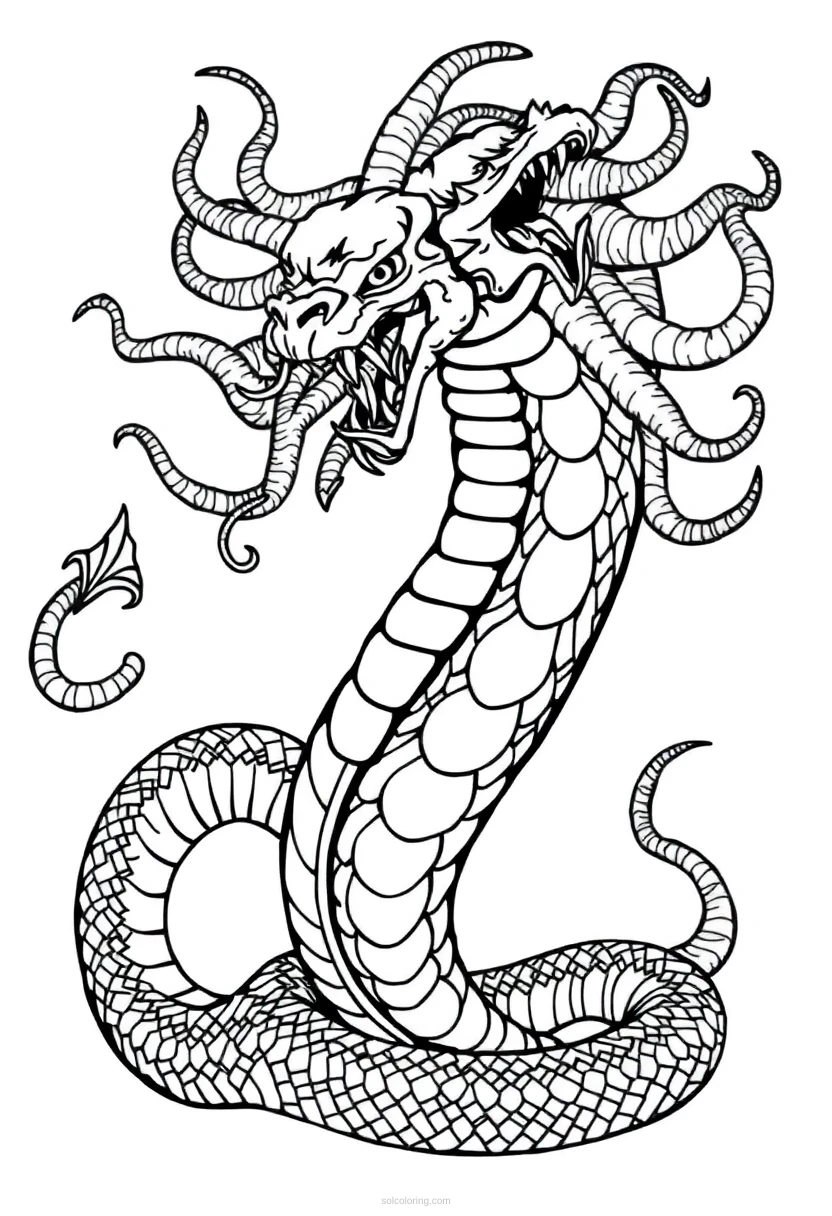
Hydra: The Many-Headed Serpent Coloring Pages
6 free printable designs including Standard, Standard, Standard, Standard and more.
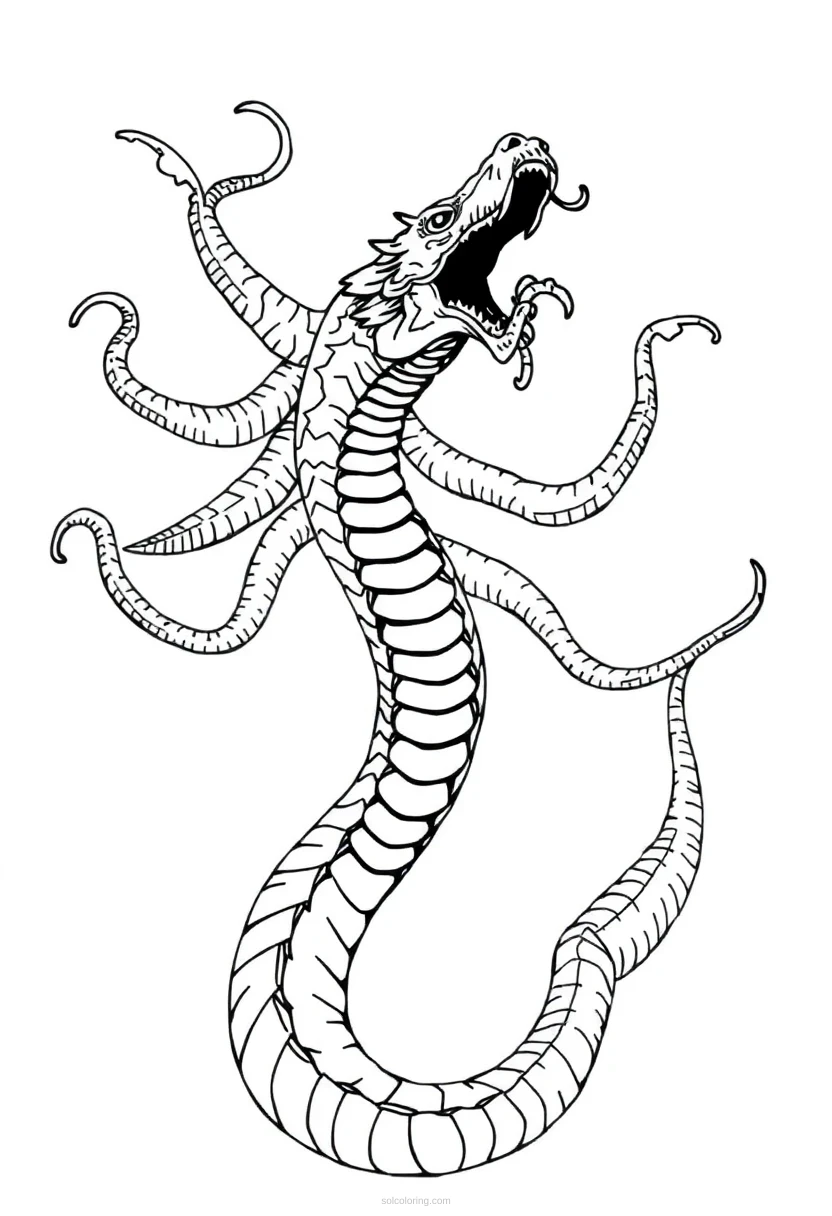
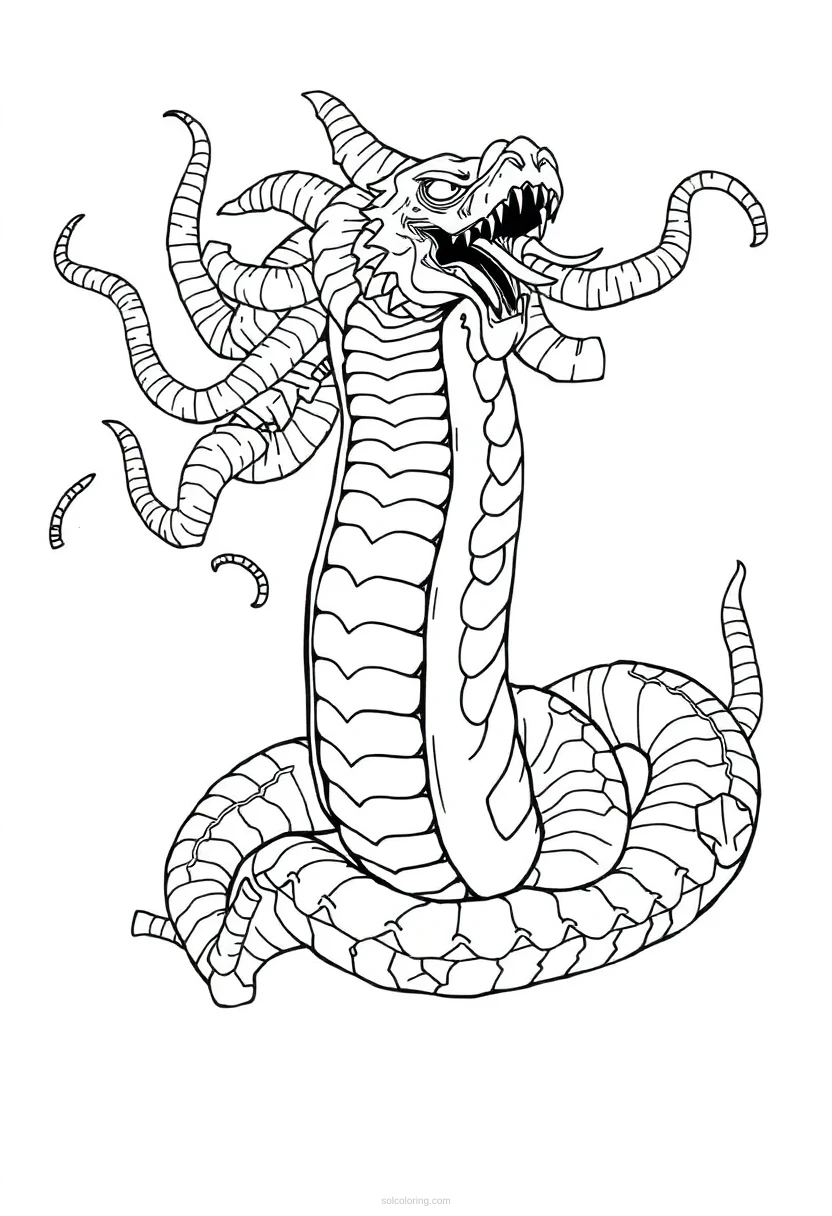
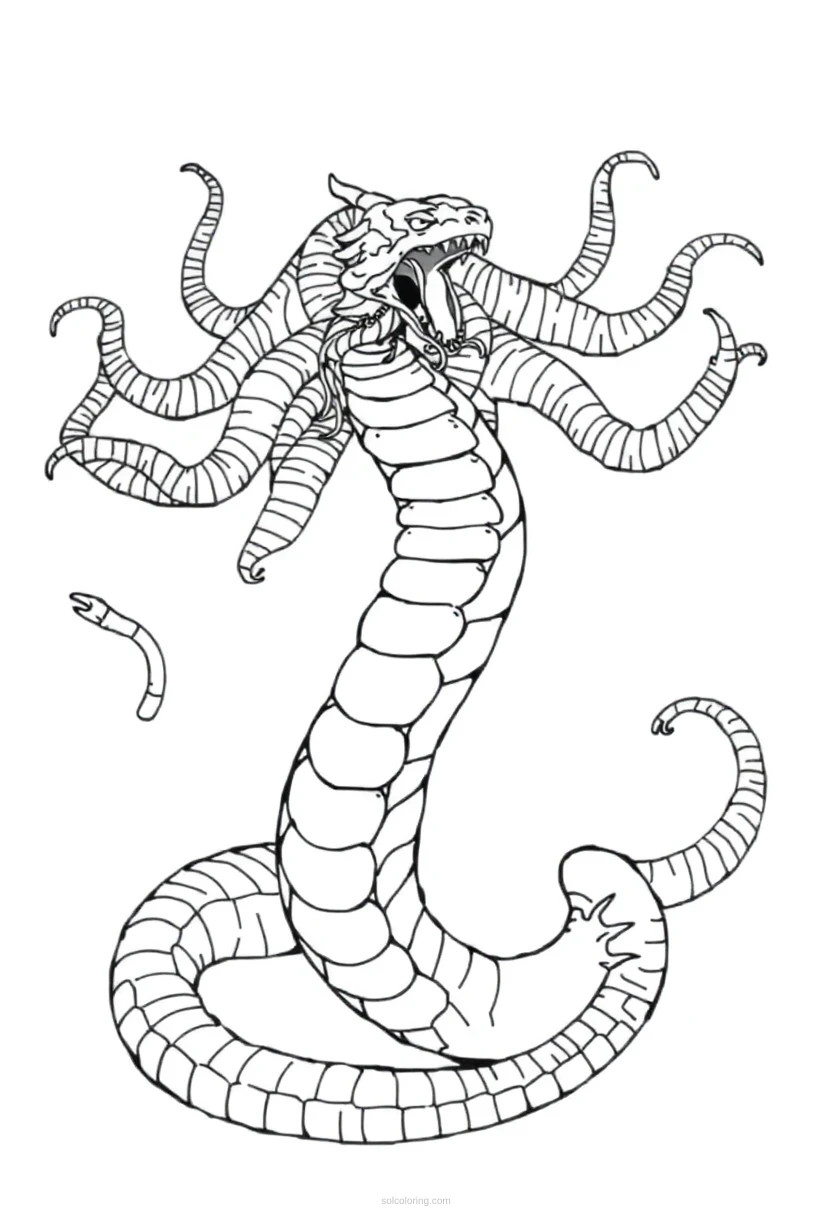
The Hydra is one of ancient Greece's most fearsome monsters, a massive serpent with multiple heads that could regrow whenever one was cut off. According to legend, this creature guarded the entrance to the Underworld and posed such a deadly threat that slaying it became one of the Twelve Labors of Hercules. Our free printable coloring page brings this mythological beast to life, letting you explore its serpentine form and countless heads. Whether you're interested in Greek mythology or love fantastical creatures, this free printable coloring page offers a creative way to engage with this legendary monster. Perfect for mythology enthusiasts and anyone who enjoys bringing legendary creatures to color.
Read more →Read less ↑
Choose a style
Did you know?
Fun facts about Hydra: The Many-Headed Serpent
The Hydra's venom was so potent that even its blood remained deadly for years after the creature's death, poisoning Hercules himself when it contaminated his clothing.
In some versions of the myth, the Hydra was said to be a child of Typhon and Echidna, making it related to other famous Greek monsters like Cerberus and the Chimera.
The Hydra's regenerating heads inspired the modern expression 'hydra-headed problem,' meaning a challenge that gets worse when you try to solve it.
Ancient Greek coins and shields sometimes featured images of the Hydra, making it one of the most recognizable monsters in classical art and symbolism.
Unlike most mythological creatures that appeared in single stories, the Hydra became a symbol of persistence and danger throughout Greek culture, appearing in countless artworks, pottery, and literary references.
About Hydra: The Many-Headed Serpent
Why was the Hydra so difficult for Hercules to defeat?
The Hydra's greatest power was its ability to regrow two new heads for every one that was cut off, making it seemingly immortal through conventional combat. Hercules eventually discovered that cauterizing each neck stump with fire prevented regrowth, while his nephew Iolaus helped by burning each neck after Hercules severed a head, finally allowing him to kill the monster.
How many heads did the Hydra actually have?
Ancient Greek sources disagree on the exact number, with estimates ranging from seven to one hundred heads. The most common depiction shows nine heads, with one being immortal and golden. Different artists and storytellers imagined the creature differently, reflecting how mythology evolved across ancient Greece.
Where did the Hydra live according to Greek mythology?
The Hydra lived in the swamps of Lerna, a marshy region in ancient Greece near Argos. This location was said to be so toxic and dangerous that even the creature's breath could kill approaching warriors. The swamp's poisonous atmosphere made the Hydra's lair an almost impenetrable fortress.
What was the Hydra's connection to Hera in Greek mythology?
Hera, the queen of the gods, specifically sent the Hydra to be an obstacle during Hercules' Twelve Labors because she was jealous of him. This was part of her vendetta against Hercules, whom she viewed as a rival. The Hydra represented one of Hera's attempts to destroy the hero.
Did the Hydra appear in any other Greek myths besides Hercules' labors?
Yes, the Hydra was significant in Greek mythology beyond just Hercules' task. After Hercules defeated it, he dipped his arrows in the Hydra's deadly venom, which became his most powerful weapon. This toxic blood later played a crucial role in his death when it infected a gift of clothing from Deianira.
What type of creature was the Hydra exactly?
The Hydra was depicted as a serpent or dragon-like creature, though larger and far more dangerous than ordinary snakes. Ancient artists often showed it with a body similar to a snake, scales covering its form, and multiple serpentine necks sprouting from a central trunk, creating a truly monstrous appearance.
More Greek coloring pages
Coloring page FAQs
Are these Hydra Many Headed Serpent coloring pages free?
Yes, absolutely! All of our Hydra coloring pages are completely free to download and print. There's no signup required, no hidden fees, and no watermarks. Simply visit our site, select your favorite design, and print it at home on standard paper.
What age are these Hydra Many Headed Serpent coloring pages for?
These coloring pages are designed for kids and adults aged 8 to 14, though younger children with adult supervision and older teens may enjoy them too. We offer varying complexity levels, from simple outlines to more detailed designs with intricate mythological details.
How do I print these Hydra Many Headed Serpent coloring pages?
Printing is simple and requires no special setup. Download the PDF, open it on your computer, and print using any standard home printer on A4 or Letter size paper. No account creation is needed, and you can print as many copies as you'd like.