Solar System
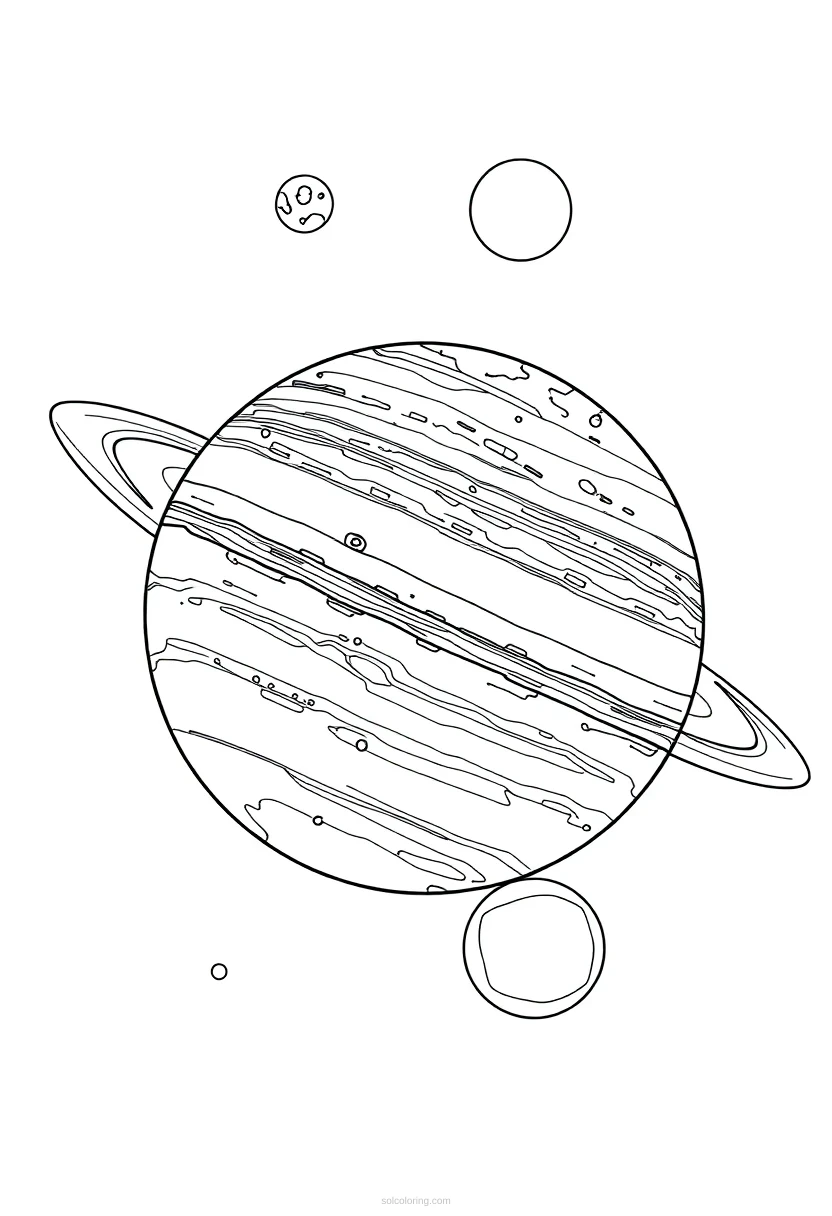
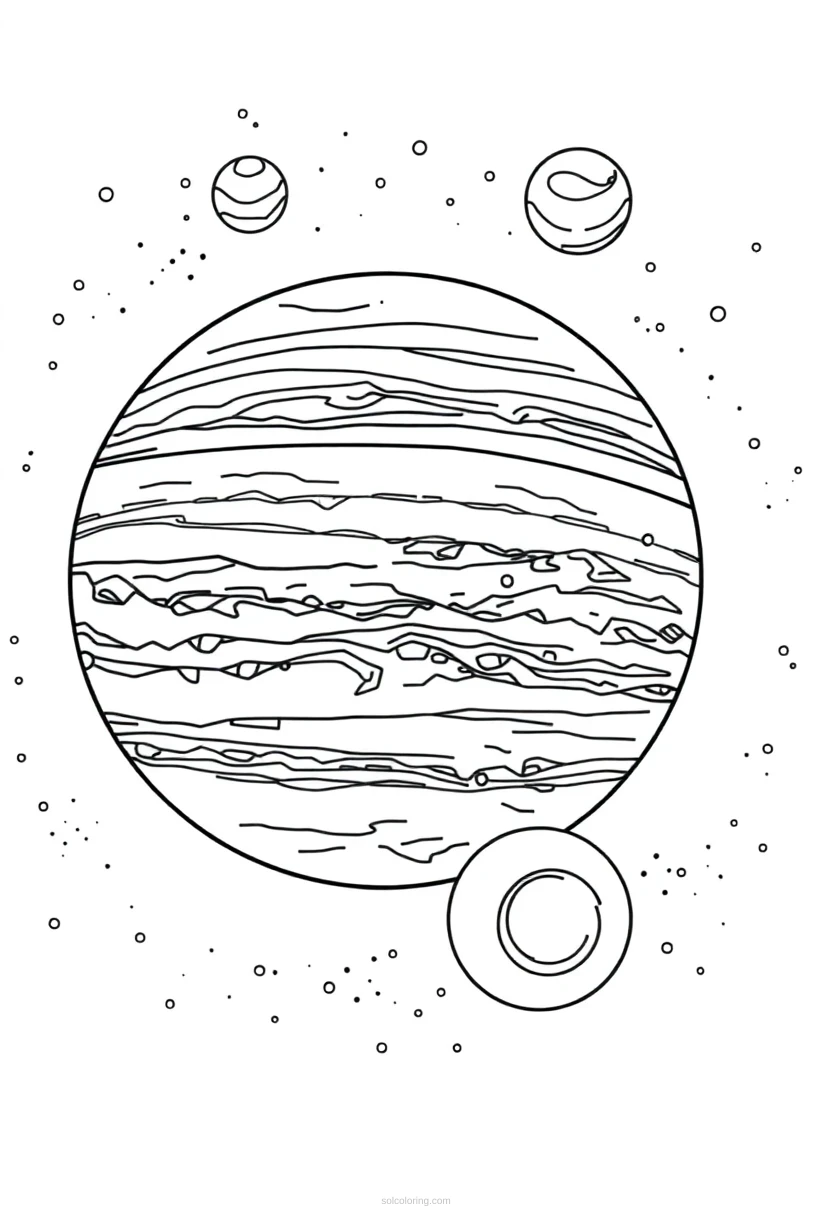
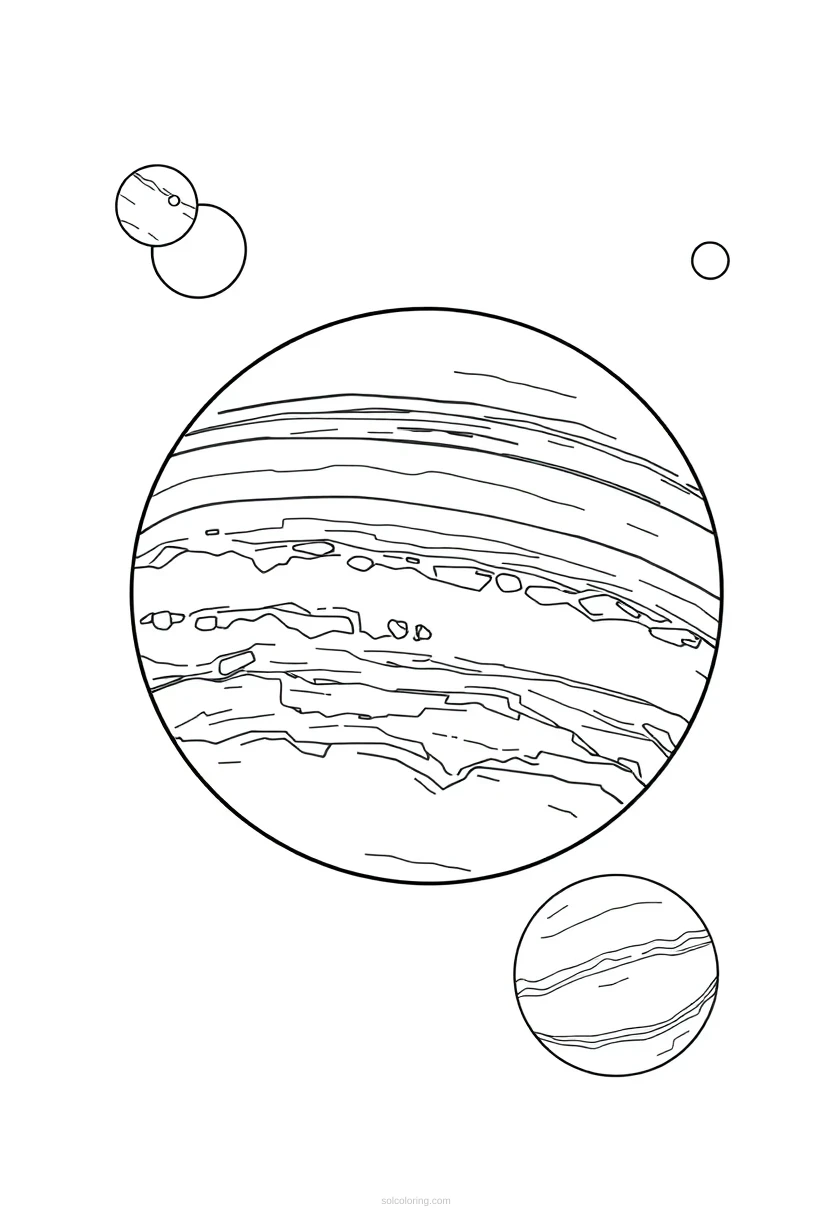
Jupiter And Its Moons Coloring Pages
6 free printable designs including Standard, Standard, Standard, Standard and more.
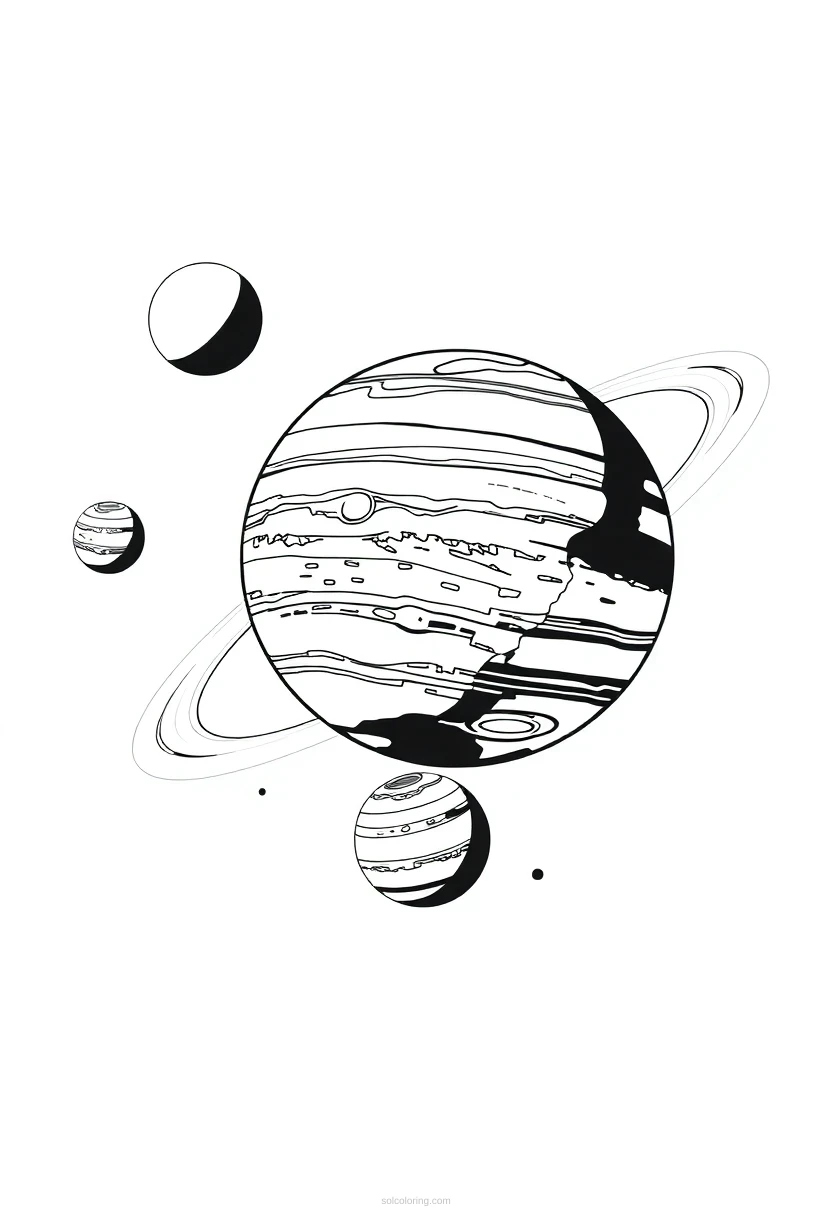
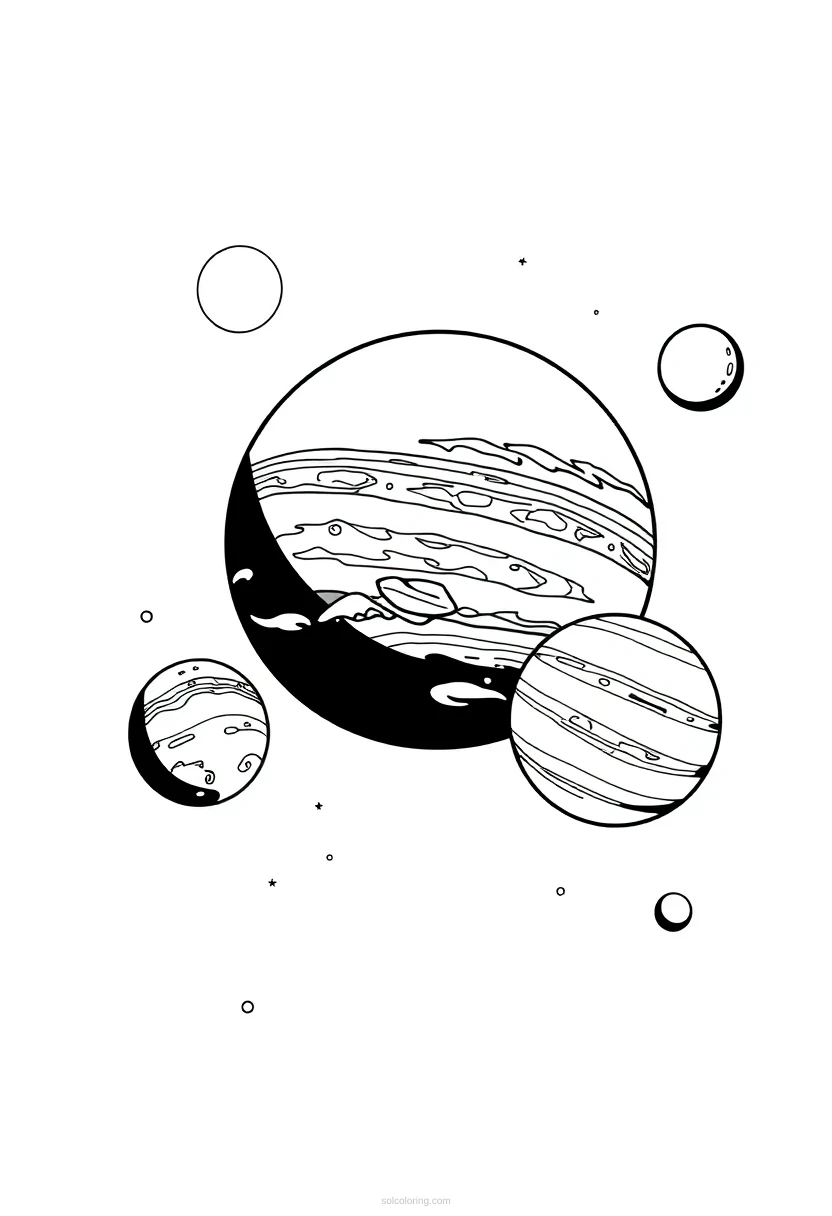
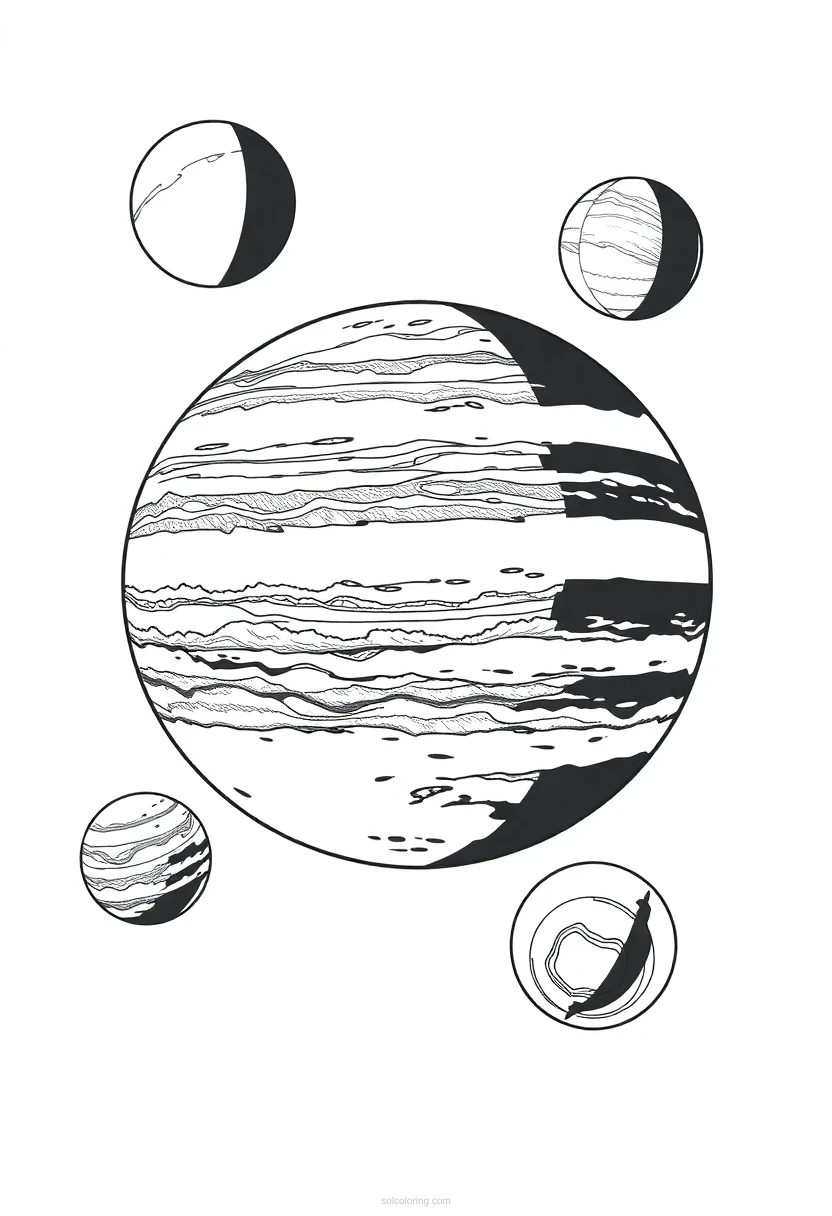
Jupiter is the giant king of our Solar System, and it rules over an incredible family of moons. With 95 known moons orbiting this massive gas giant, Jupiter's moon system is like a miniature solar system all its own. The largest moons, including the famous Galilean moons discovered by Galileo in 1610, are worlds of ice, volcanoes, and mysterious oceans. Our free printable coloring page of Jupiter and its moons lets you explore this cosmic wonder while learning about one of space's most fascinating planetary systems. Whether you're interested in astronomy or just love space-themed art, this free printable coloring page brings the majesty of Jupiter right to your creative hands.
Read more →Read less ↑
Choose a style
Did you know?
Fun facts about Jupiter And Its Moons
Jupiter's moon Ganymede is larger than the planet Mercury and is the biggest moon in the entire Solar System.
Io's volcanoes erupt sulfur and sulfur dioxide hundreds of miles into space, creating colorful yellow, orange, and red patches on its surface.
Europa's icy crust is smoother than any ocean on Earth, with almost no mountains or valleys interrupting its frozen landscape.
Jupiter completes one full rotation in just 10 hours, making it the fastest-spinning planet in our Solar System despite its enormous size.
If Jupiter were hollow, you could fit over 1,300 Earths inside it, yet it still wouldn't fill the volume of the Great Red Spot, its largest storm.
About Jupiter And Its Moons
Why does Jupiter have so many moons?
Jupiter's powerful gravity captures asteroids and smaller objects traveling through space, making it a cosmic moon collector. Scientists believe some moons were captured from the asteroid belt between Mars and Jupiter, while others formed directly from the material surrounding Jupiter when it was young. This ongoing capture process continues today.
What are the four Galilean moons?
The four largest Galilean moons are Io, Europa, Ganymede, and Callisto, discovered by Galileo Galilei in 1610. Io is covered in active volcanoes, Europa likely has a hidden ocean beneath its icy crust, Ganymede is the largest moon in the entire Solar System, and Callisto is heavily cratered from ancient impacts.
Could there be life on Jupiter's moons?
Europa is particularly interesting because scientists believe liquid water oceans exist beneath its frozen surface, making it a prime candidate for potential microbial life. Enceladus near Saturn has similar conditions. The search for life beyond Earth often focuses on these icy moons hiding subsurface oceans.
How big is Jupiter compared to Earth?
Jupiter is absolutely enormous: it could fit approximately 1,300 Earths inside it. Despite its massive size, Jupiter rotates incredibly fast, completing one rotation every 10 hours. This rapid spinning gives Jupiter distinctive bands and swirls in its atmospheric clouds visible even through binoculars.
What makes Io so special among Jupiter's moons?
Io is the most volcanically active body in our entire Solar System, with hundreds of active volcanoes constantly reshaping its surface. This extreme activity results from tidal heating caused by Jupiter's immense gravity constantly stretching and squeezing Io's interior, generating tremendous heat and molten material.
How far away is Jupiter from Earth?
Jupiter's distance from Earth varies dramatically as both planets orbit the Sun. At its closest approach, Jupiter is about 365 million miles away, and at its farthest point, it reaches 601 million miles away. Despite this distance, Jupiter is bright enough to see without a telescope and has fascinated humans for thousands of years.
More Solar System coloring pages
Coloring page FAQs
Are these Jupiter And Its Moons coloring pages free?
Yes, absolutely! All Jupiter and Its Moons coloring pages on Sol Coloring are completely free to download and print. No signup, registration, or payment required. Simply visit our website, select your favorite design, and start coloring right away from your home printer.
What age are these Jupiter And Its Moons coloring pages for?
Our Jupiter and Its Moons coloring pages are designed for kids and adults aged 8 to 14, with varying difficulty levels. Younger colorers can enjoy simple designs with bold outlines, while older teens can tackle more detailed versions featuring realistic planetary textures and intricate moon landscapes.
How do I print these Jupiter And Its Moons coloring pages?
Printing is simple and convenient. Download the PDF file to your computer, then print it on standard A4 or Letter-sized paper using any home printer. No special software or settings needed. You can print multiple copies to color again and again, or share with friends and family.