Solar System
Solar System With All Planets Coloring Pages
6 free printable designs including Standard, Standard, Standard, Standard and more.
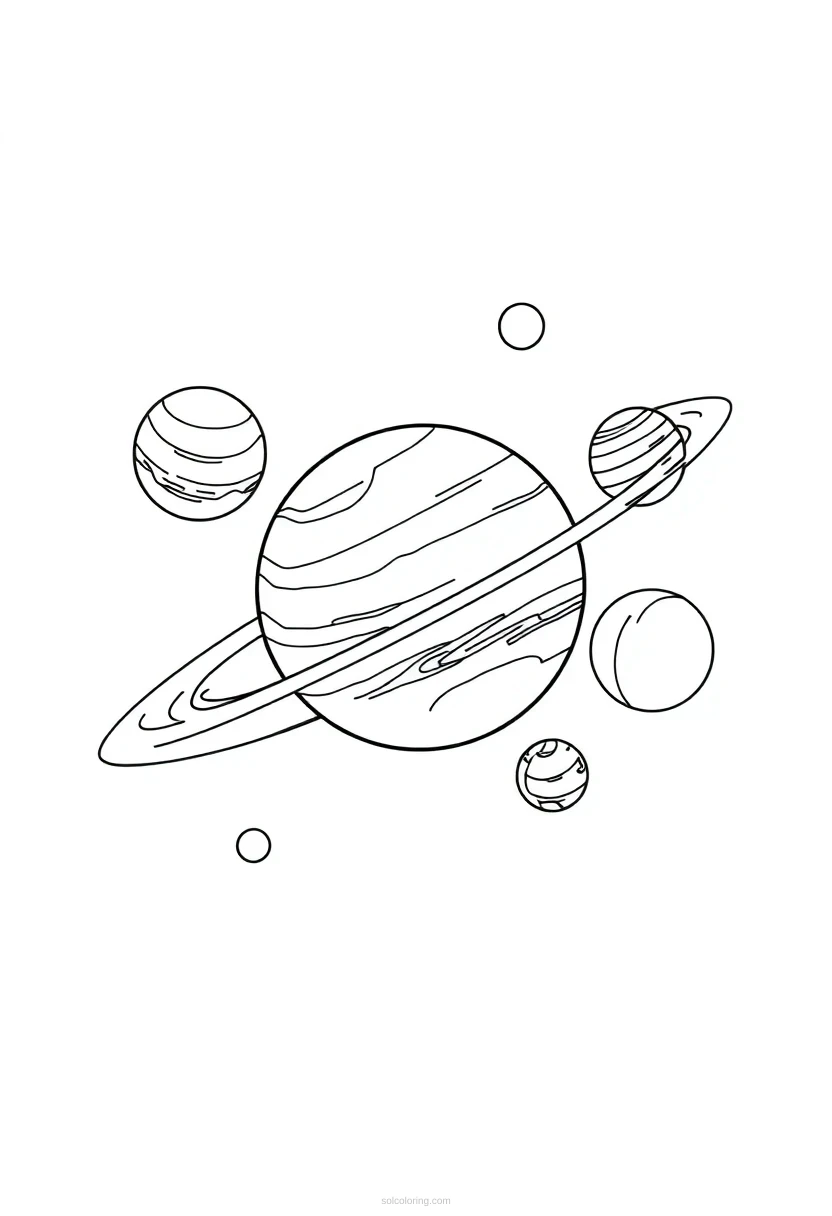
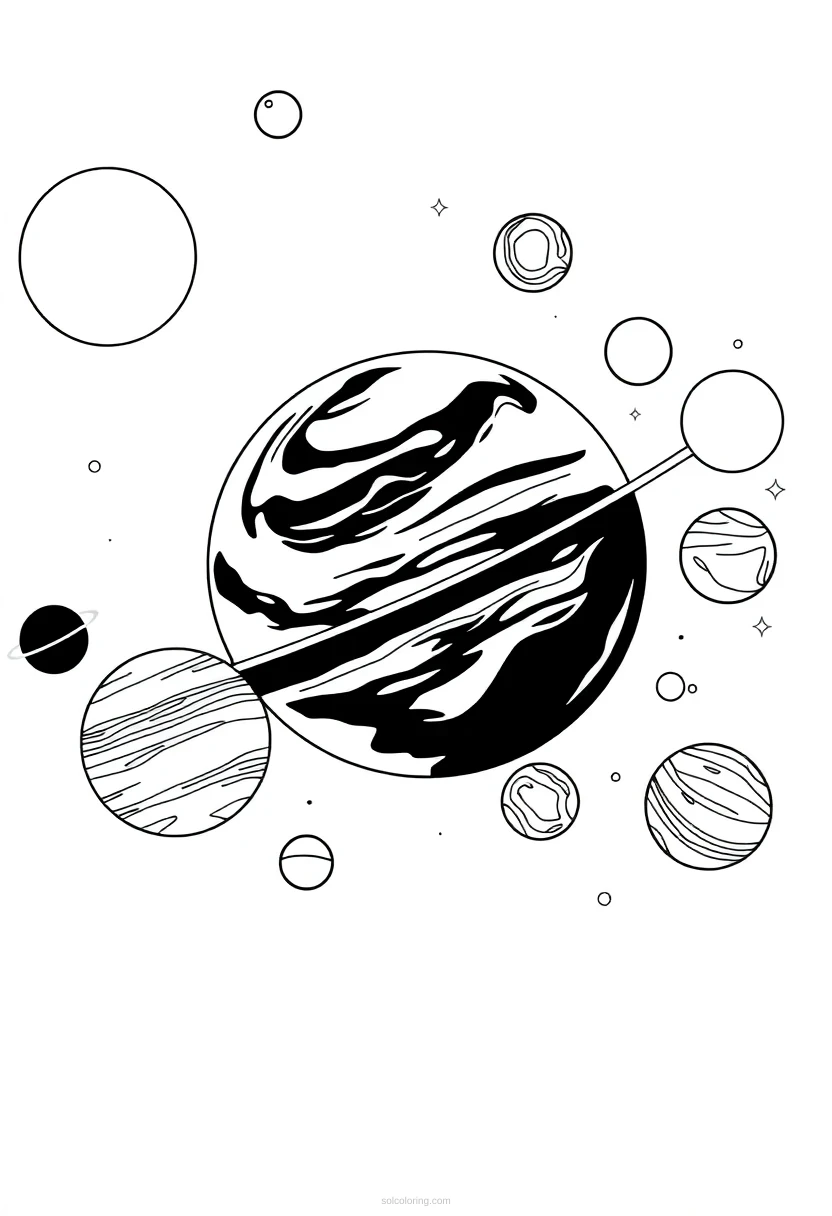
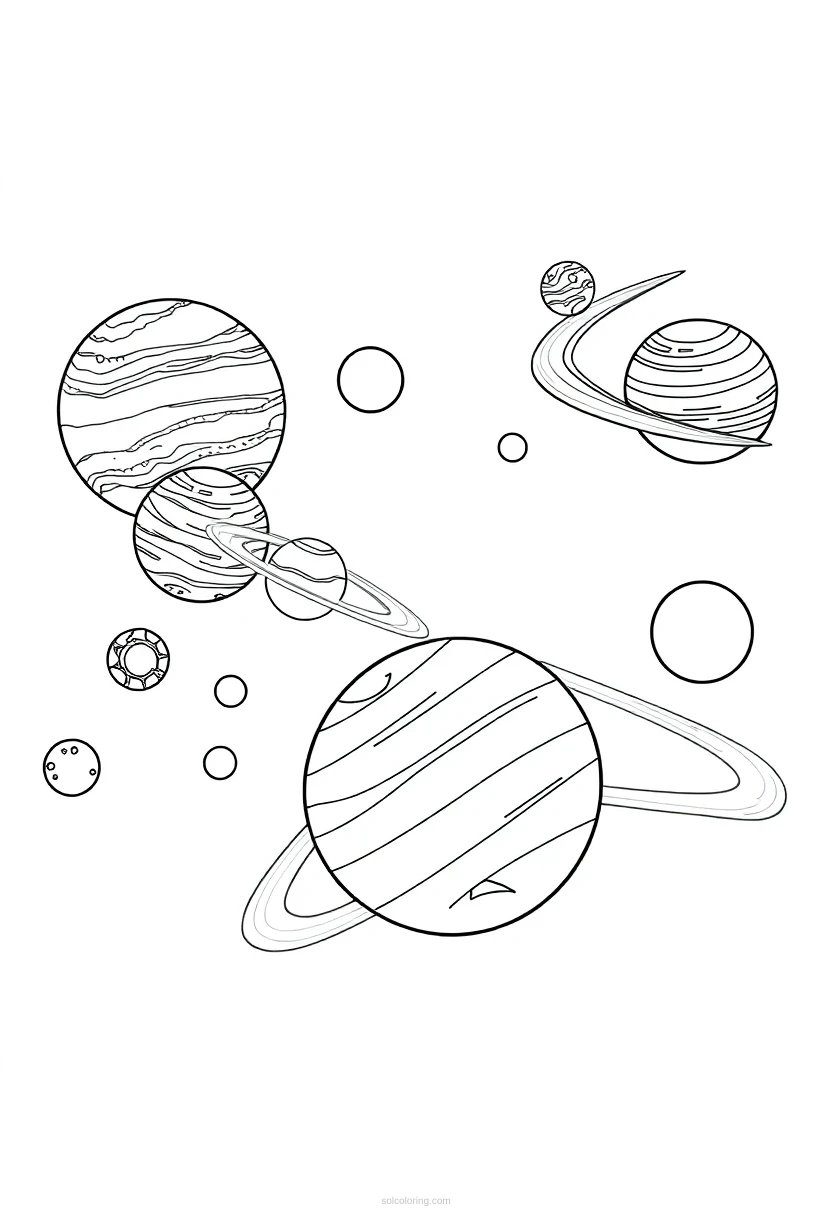
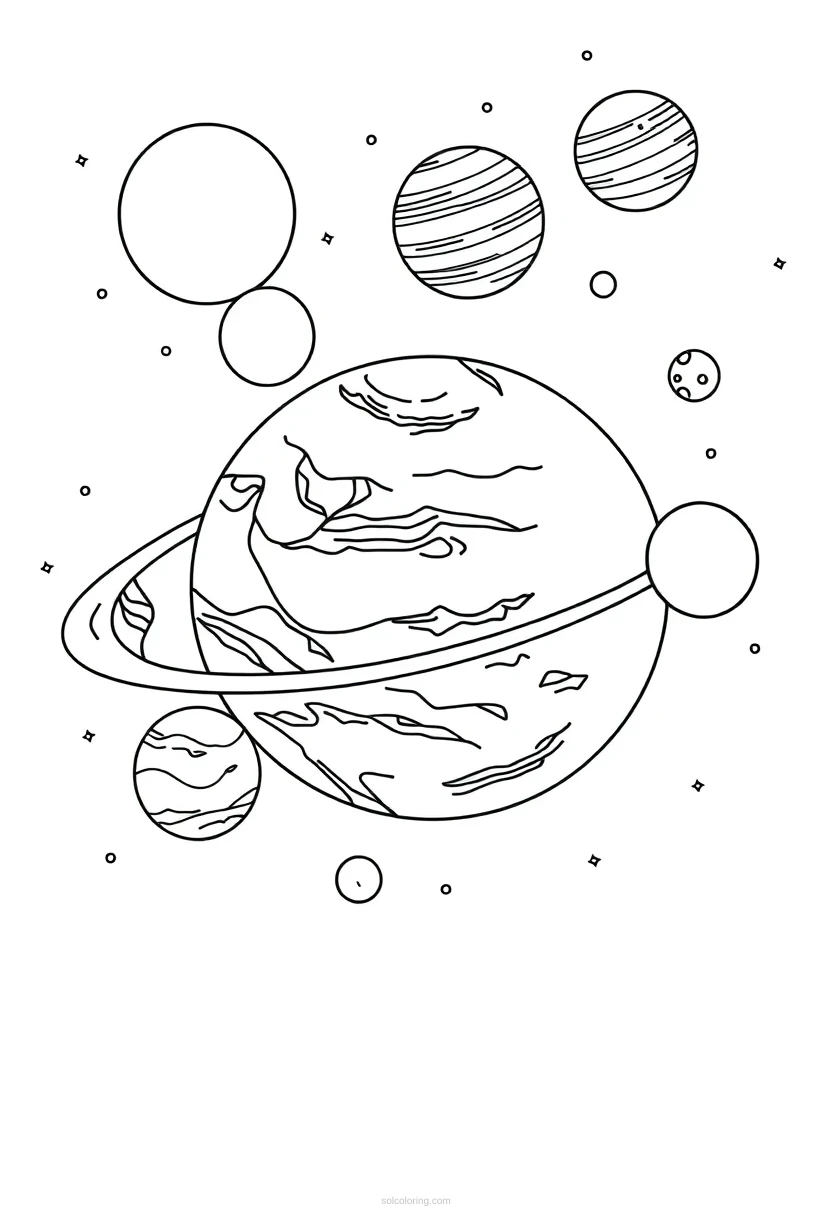
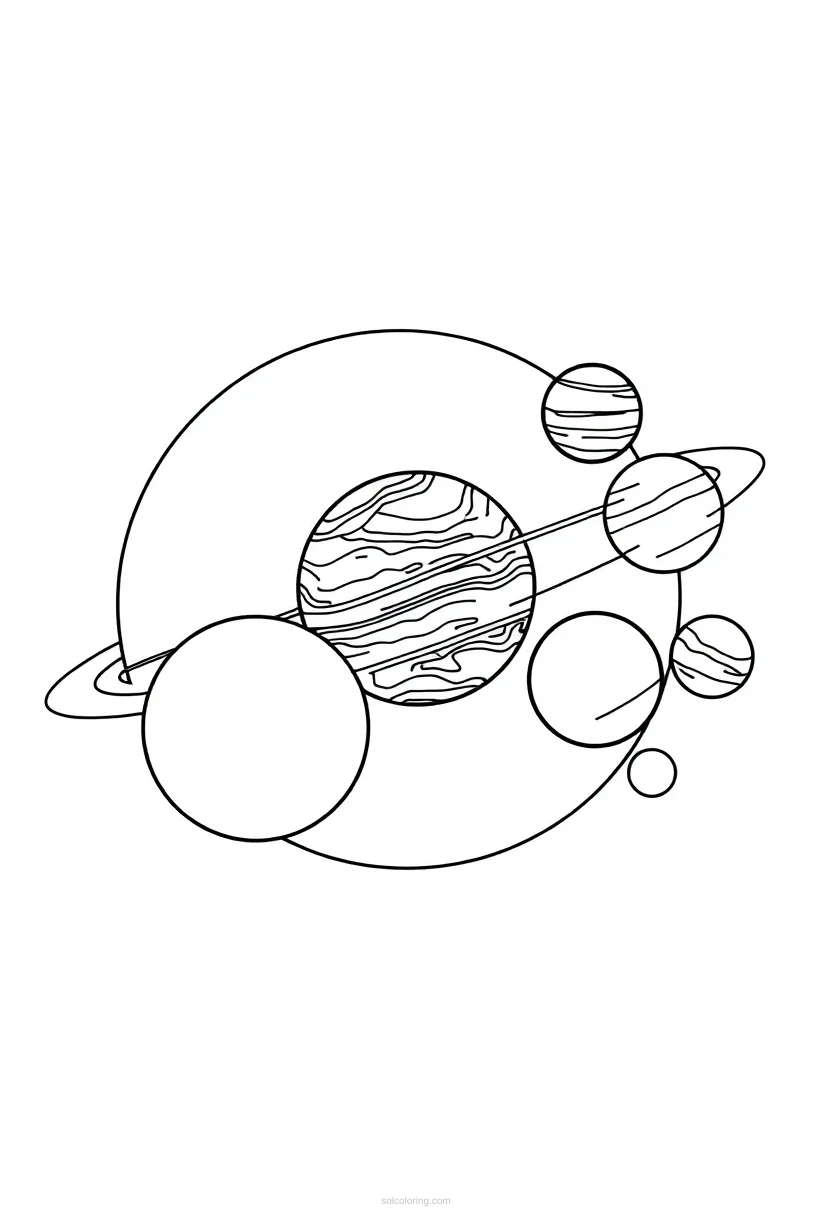
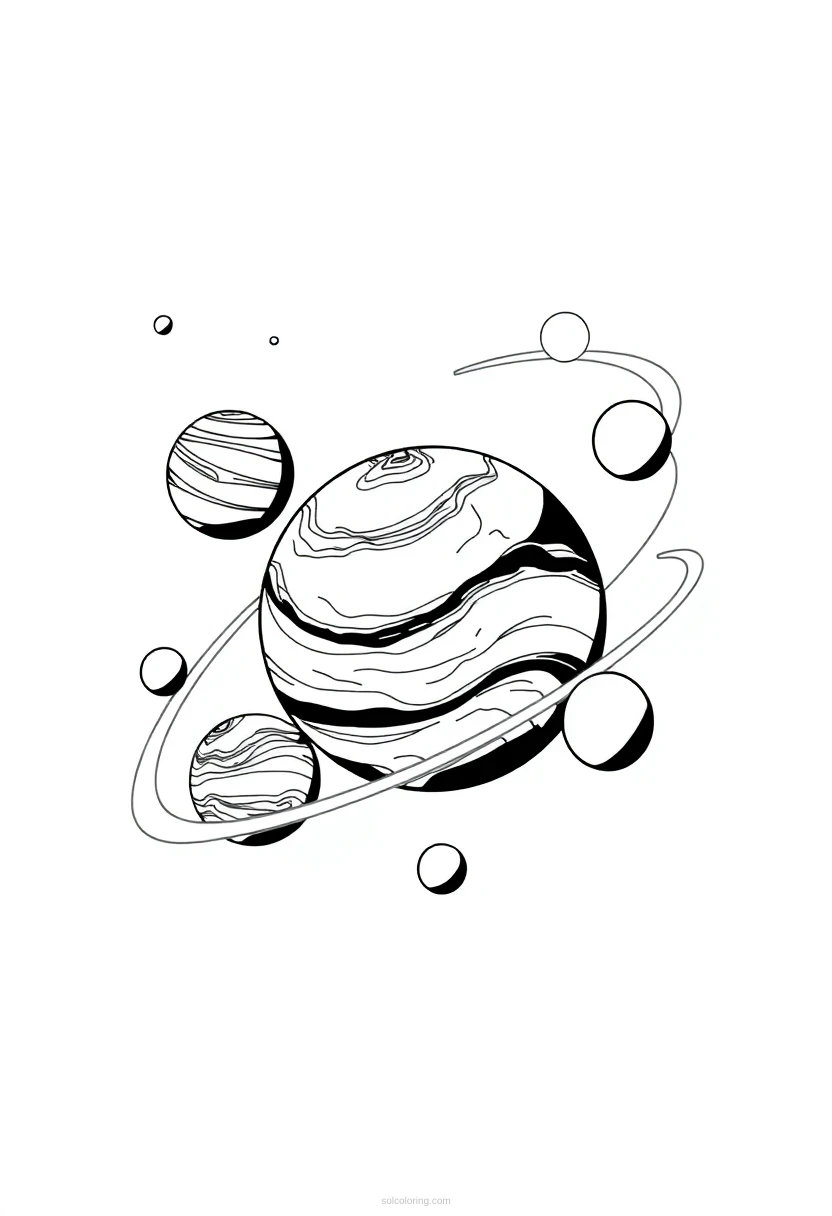
Explore the wonders of our solar system with this engaging free printable coloring page featuring all eight planets in their orbits around the Sun. From the scorching heat of Mercury to the icy depths of Neptune, this cosmic scene brings the majesty of space right to your coloring desk. Perfect for kids who love astronomy and space exploration, this free printable coloring page combines art and science education. Whether you're studying planetary science in school or simply fascinated by the cosmos, coloring the planets helps you learn their order, size, and unique characteristics while unleashing your creativity.
Read more →Read less ↑
Choose a style
Did you know?
Fun facts about Solar System With All Planets
A day on Venus is longer than its year, taking 243 Earth days to rotate once while only taking 225 days to orbit the Sun.
Jupiter's moon Europa likely has more water than all of Earth's oceans combined, hidden beneath a thick ice shell.
If you could somehow stand on the Sun, you would weigh 28 times more than you do on Earth due to its immense gravity.
Neptune experiences the fastest winds in the entire solar system, with speeds exceeding 2,100 kilometers per hour.
The asteroid belt between Mars and Jupiter contains millions of rocky objects, but if gathered together, they would be smaller than Earth's moon.
About Solar System With All Planets
What are the eight planets in our solar system in order from the Sun?
The eight planets in order are Mercury, Venus, Earth, Mars, Jupiter, Saturn, Uranus, and Neptune. A helpful way to remember is the phrase 'My Very Educated Mother Just Served Us Noodles.' Pluto was reclassified as a dwarf planet in 2006 because it hasn't cleared its orbital path of other objects.
Which planet is the largest in our solar system?
Jupiter is by far the largest planet, so massive that over 1,300 Earths could fit inside it! Despite its enormous size, Jupiter spins incredibly fast, completing one rotation every 10 hours. Its iconic Great Red Spot is a storm larger than Earth itself that has raged for at least 300 years.
Why do the planets have different colors?
Planet colors depend on their atmosphere and surface composition. Mercury appears gray due to its rocky surface. Venus glows yellow from thick clouds of sulfuric acid. Earth is blue and green from water and life. Mars looks reddish from iron oxide (rust). Gas giants like Jupiter and Saturn display bands of colorful clouds from different chemical compositions.
How long does it take each planet to orbit the Sun?
Orbital periods vary greatly. Mercury takes only 88 Earth days, while Neptune takes 165 Earth years! Planets closer to the Sun move faster and orbit more quickly, following a pattern called Kepler's Third Law. Earth's orbit takes exactly 365.25 days, which is why we add a leap day every four years.
What makes Saturn's rings so special?
Saturn's rings are composed of billions of particles of ice and rock, ranging from dust-sized to house-sized chunks. These particles orbit Saturn in a thin, flat band that can stretch over 282,000 kilometers across, yet is surprisingly thin, sometimes only 100 meters deep. Other gas giants have rings too, but Saturn's are by far the most spectacular and visible.
Can humans live on any other planets in our solar system?
Currently, humans can only survive on Earth. Mars is the most habitable alternative, with a thin atmosphere and polar ice caps containing water. However, temperatures plunge to minus 80 degrees Celsius, and the thin atmosphere offers no protection from radiation. Venus is too hot and toxic, while the gas giants have no solid surface to stand on.
More Solar System coloring pages
Coloring page FAQs
Are these Solar System With All Planets coloring pages free?
Yes, absolutely! All of our Solar System With All Planets coloring pages are completely free to download and print. Simply visit Sol Coloring, select your favorite design, and print directly from your home printer. No hidden fees, no signup required, no strings attached.
What age are these Solar System With All Planets coloring pages for?
Our Solar System coloring pages are designed for ages 8 to 14, though anyone can enjoy them. Pages offer varying complexity levels: younger kids can enjoy simple planet outlines, while older kids appreciate detailed space scenes with orbits and stars for a more challenging coloring experience.
How do I print these Solar System With All Planets coloring pages?
Printing is simple and easy! Download the page as a PDF, open it on your computer, and click print. Choose A4 or Letter size depending on your location. Use any home printer and standard paper or cardstock. No special software or printer setup is needed.