Ancient Egypt
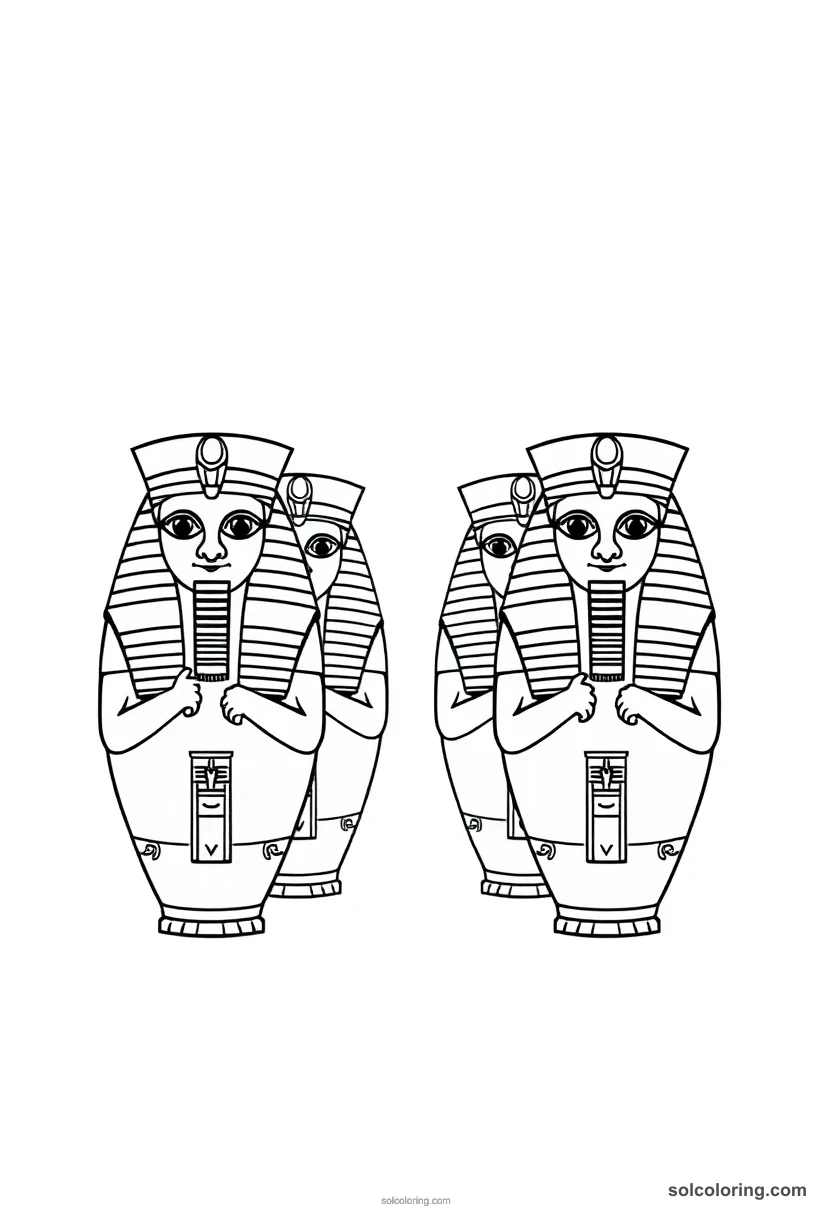
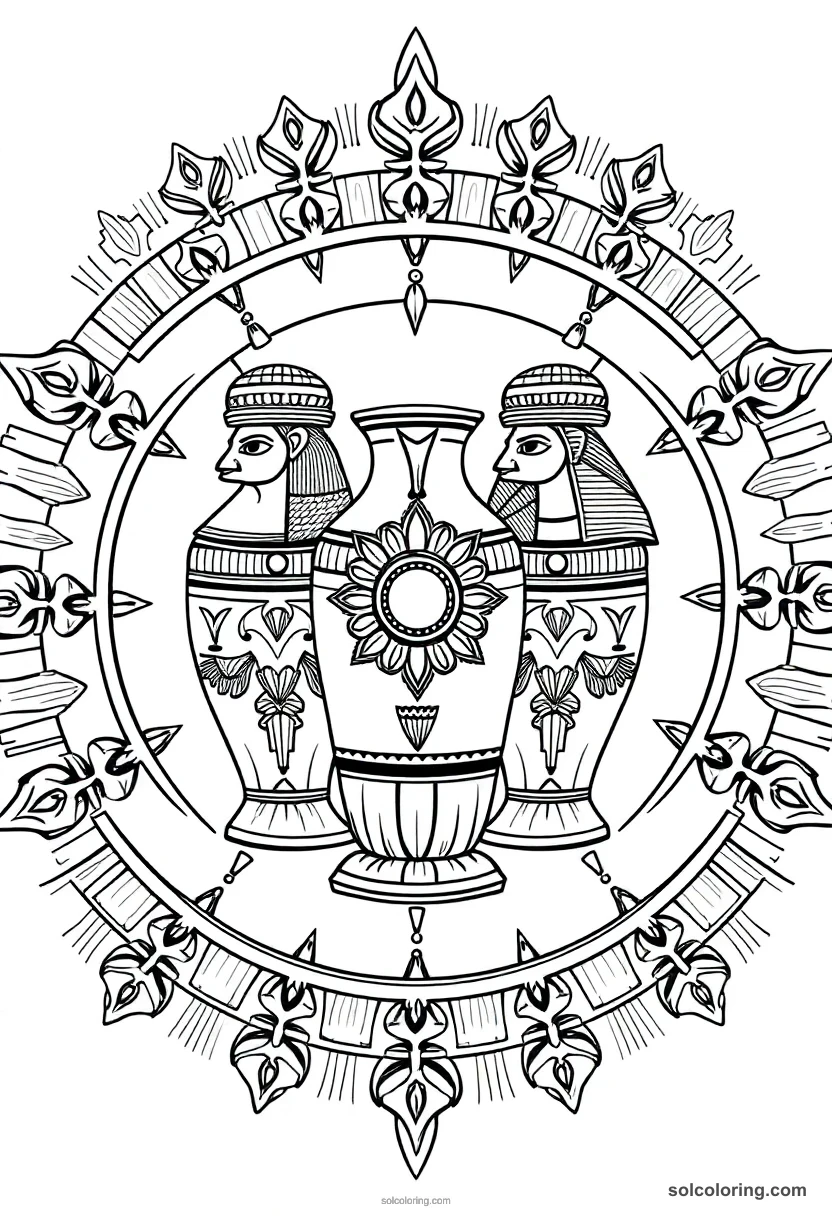
Mandala Canopic Jars of the Four Sons of Horus Coloring Page
Mandala style
About this coloring page
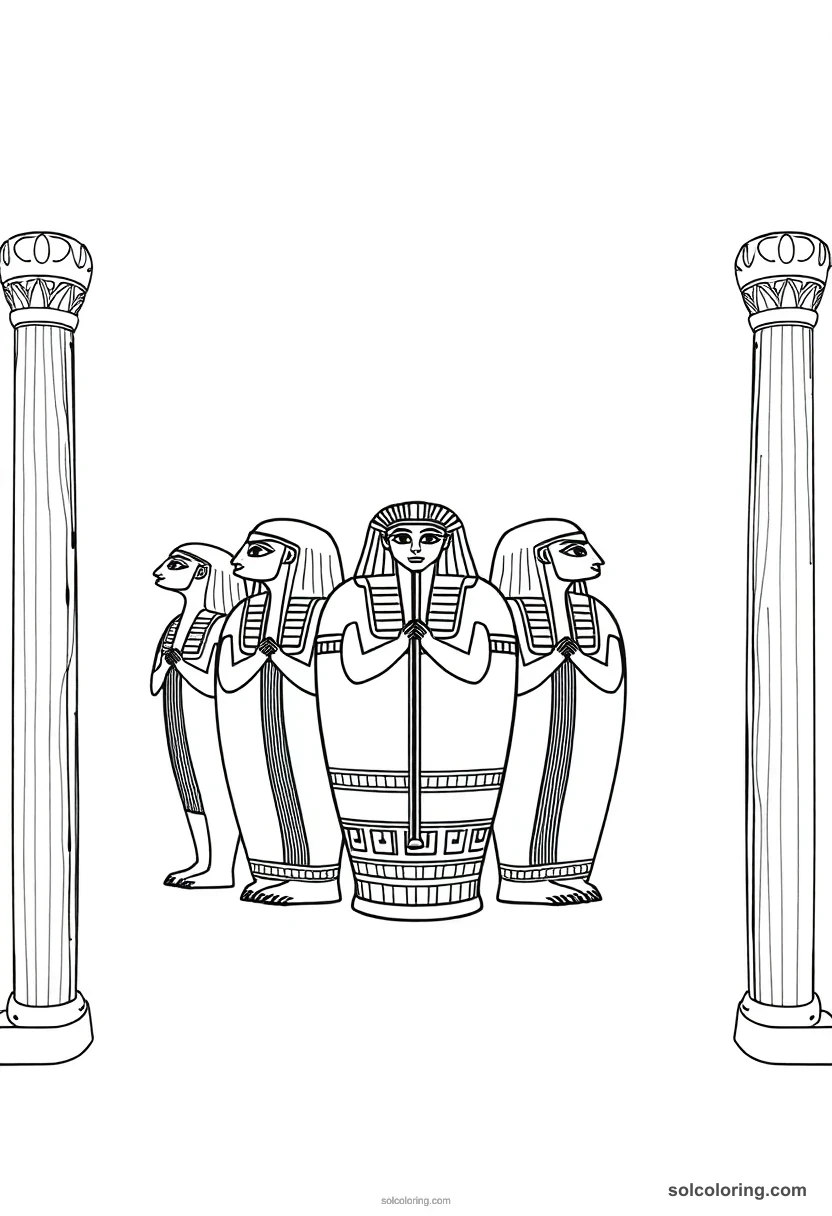
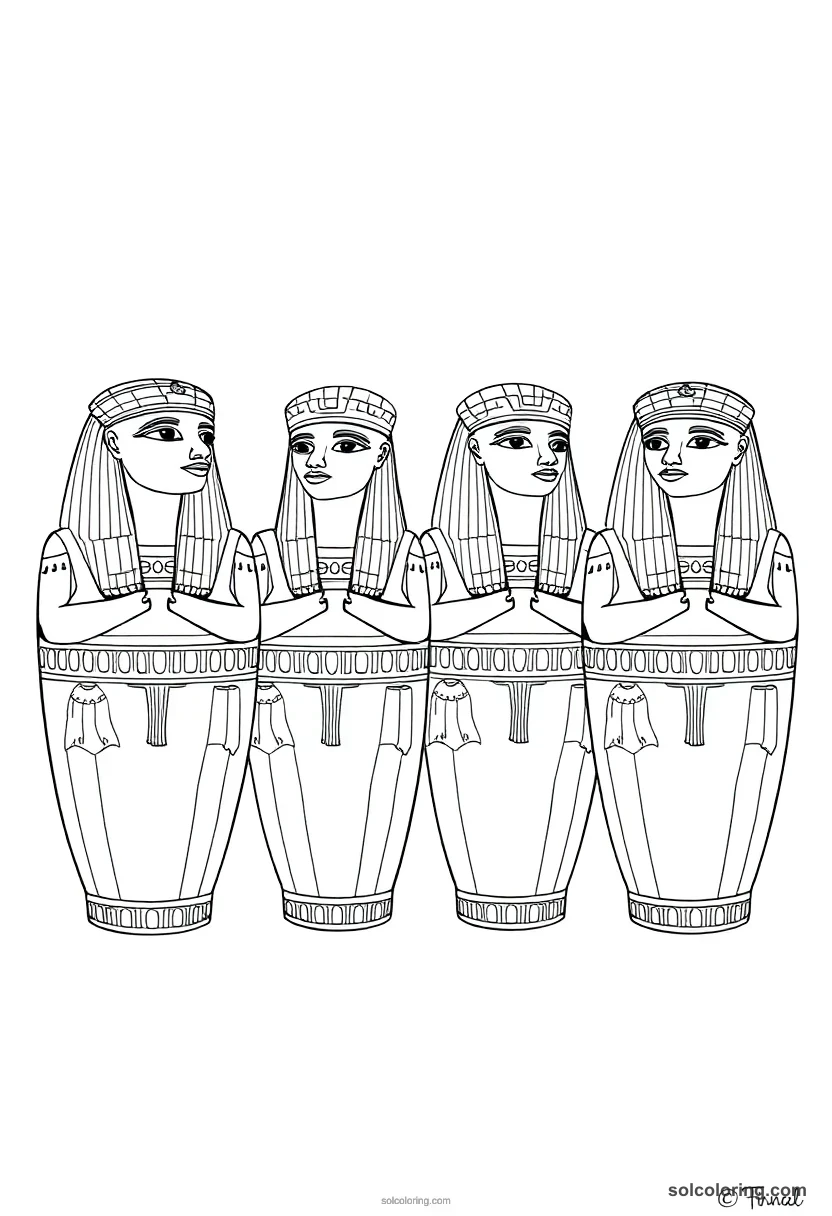
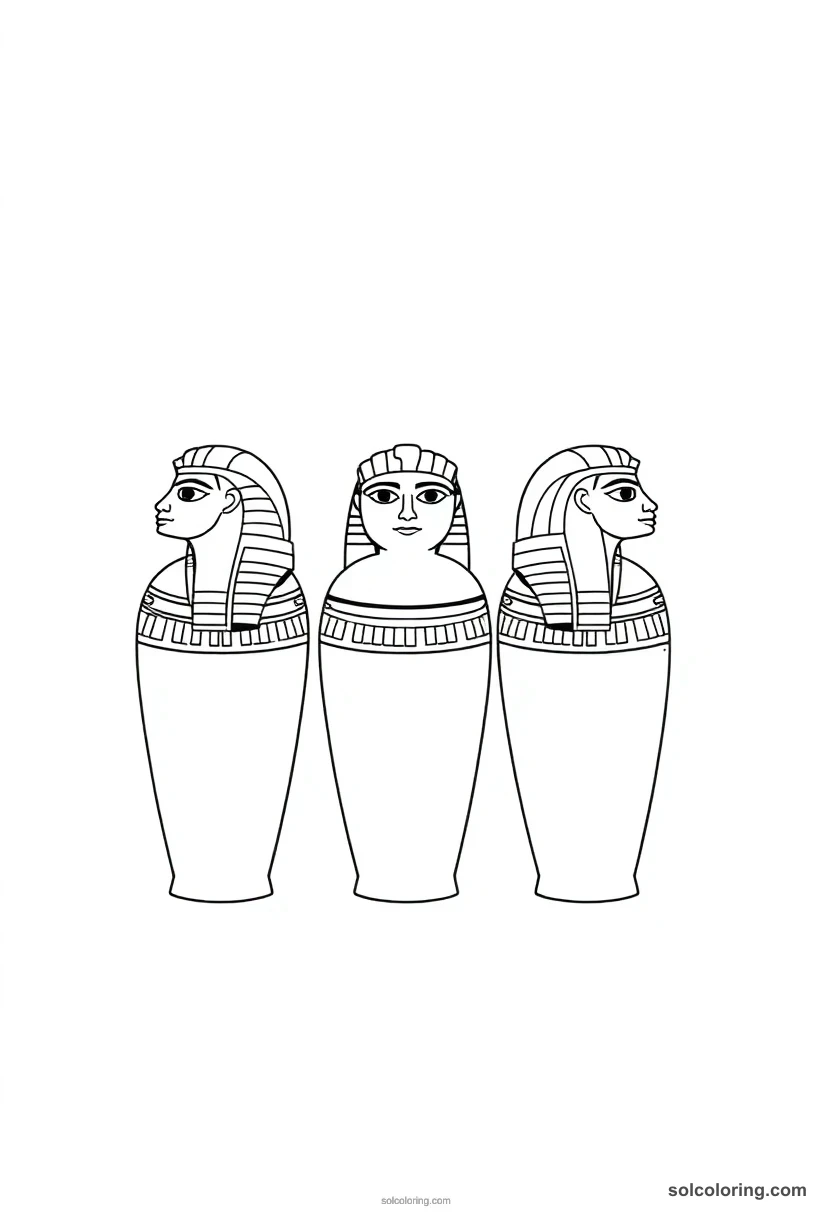
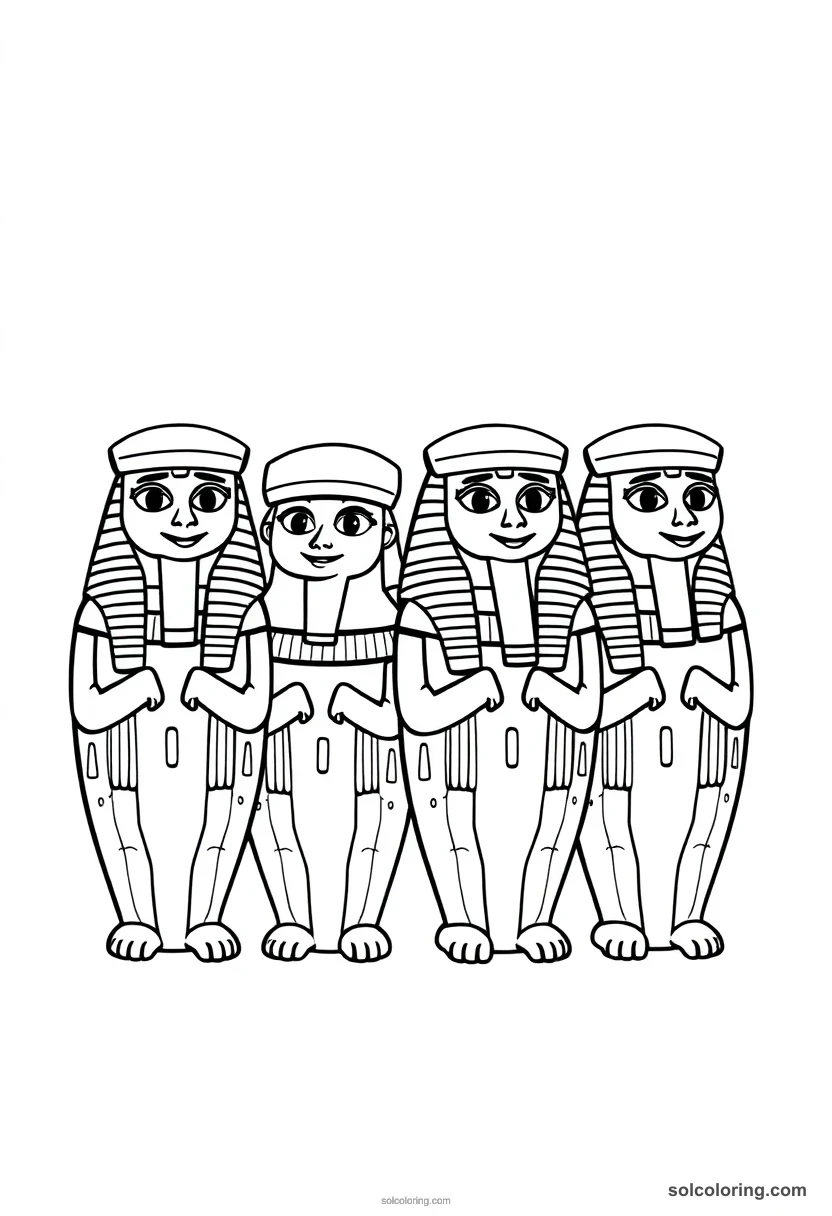
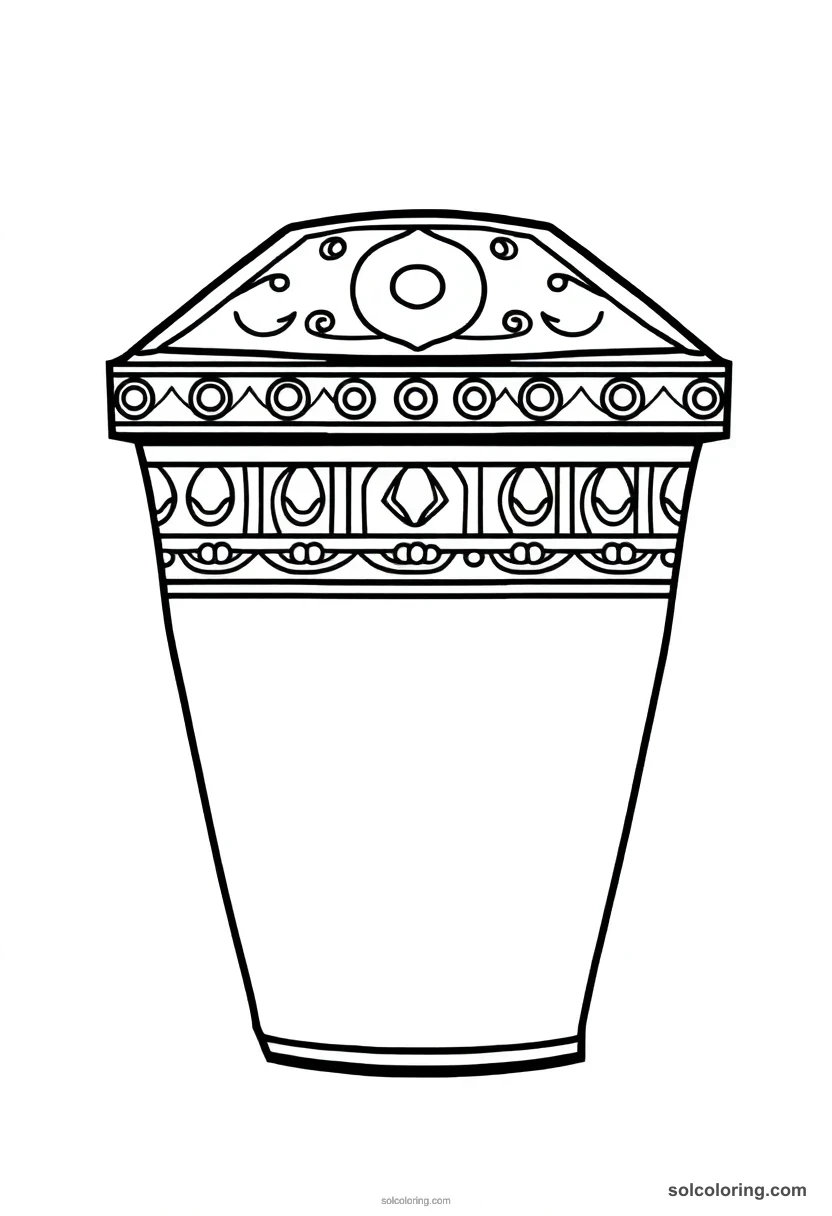
This enchanting Mandala Canopic Jars of the Four Sons of Horus coloring page combines ancient Egyptian mythology with beautiful mandala patterns, featuring the sacred vessels of Imsety, Duamutef, Hapi, and Qebehsenuef arranged in an intricate circular design. The bold, clear outlines make this free printable coloring page perfect for intermediate to advanced colorists who love both historical themes and meditative mandala art. Download and print this unique fusion of ancient civilization and mandala artistry to explore Egyptian culture through creative coloring!
Frequently asked
What organs were stored in each canopic jar?
Each son protected specific organs: Imsety guarded the liver, Hapy protected the lungs, Duamutef watched over the stomach, and Qebehsenuef safeguarded the intestines. The heart stayed in the body for judgment in the afterlife.
Why did ancient Egyptians remove organs during mummification?
Egyptians believed organs would decay and harm the body's journey to the afterlife. They removed and preserved organs separately in canopic jars, allowing the deceased to have a complete, functional body in the next world.
How old are the oldest canopic jars ever found?
The oldest canopic jars date back to around 2686 BCE during Egypt's Old Kingdom period. Early versions were simple pottery containers, but they evolved into elaborate carved limestone and alabaster masterpieces over thousands of years.
Are these Canopic Jars Of The Four Sons Of Horus coloring pages free?
Yes, all our canopic jar coloring pages are completely free to download and print. No payment or subscription required, just instant access to educational ancient Egyptian content.
What age are these Canopic Jars Of The Four Sons Of Horus coloring pages for?
These coloring pages work great for ages 8 to 14, with varying detail levels. Younger kids can enjoy simpler jar outlines while older students tackle intricate hieroglyphs and decorative patterns.