
Scientists
Louis Pasteur In 19th Century Laboratory Coloring Pages
6 free printable designs including Standard, Standard, Standard, Standard and more.
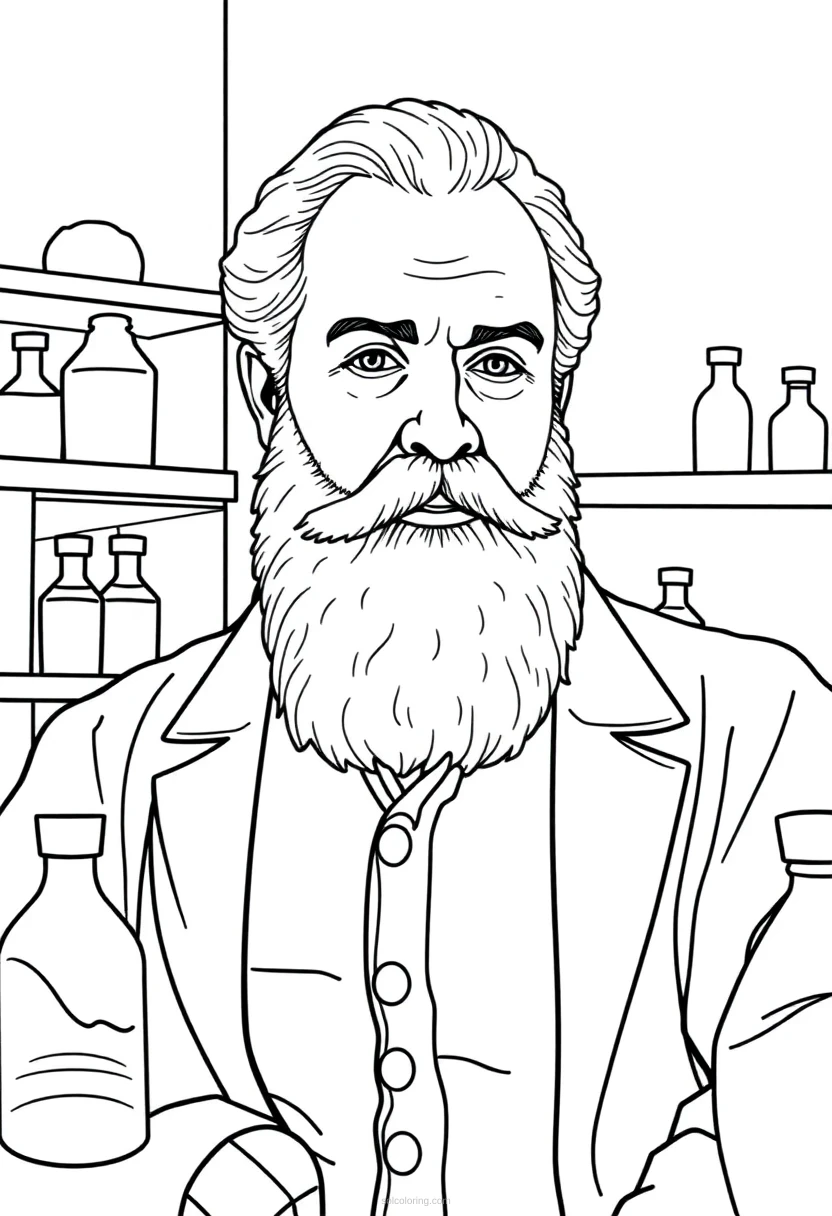
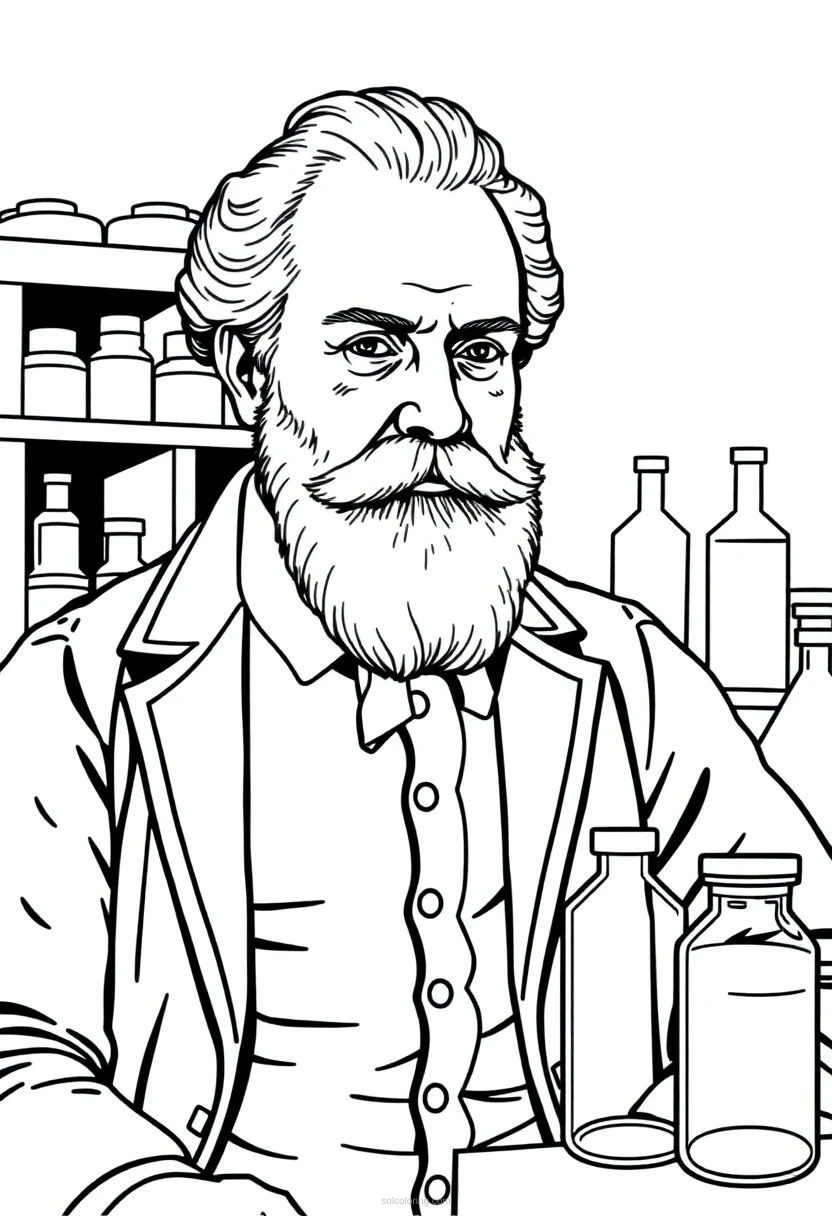
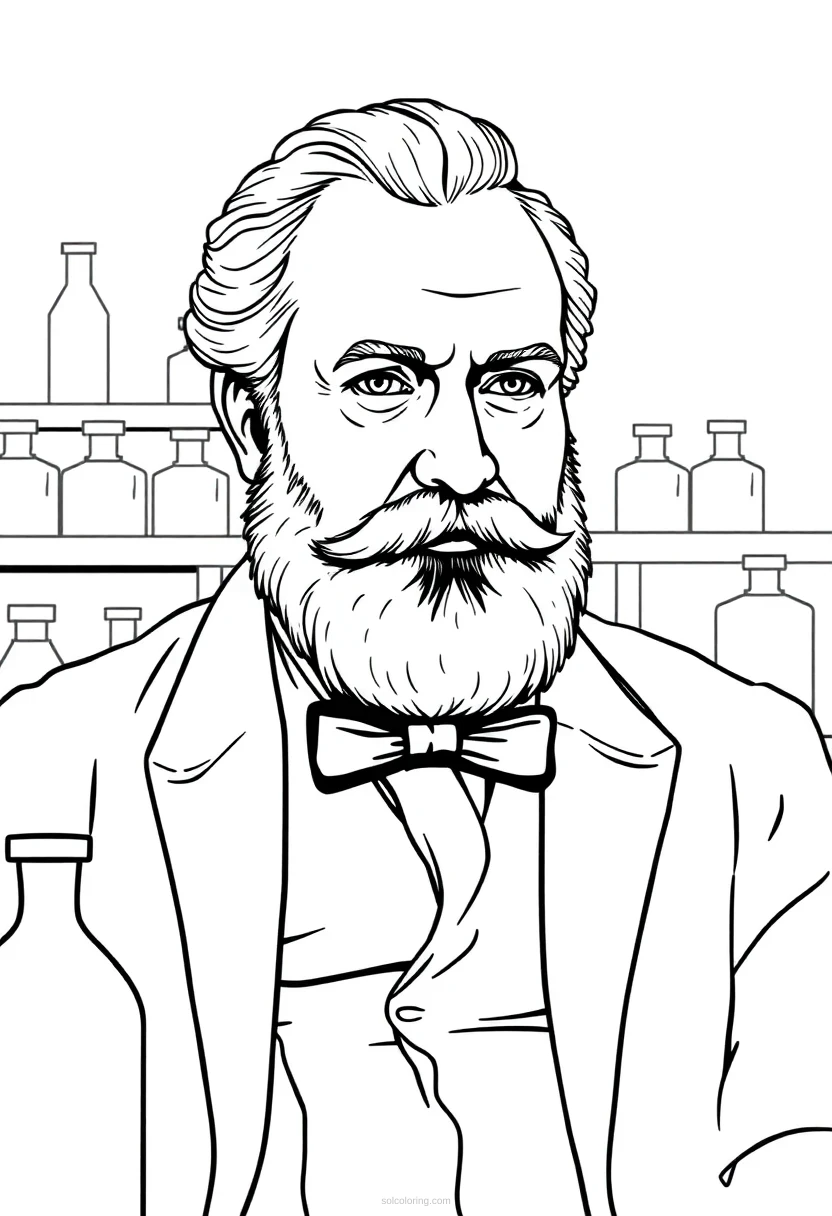
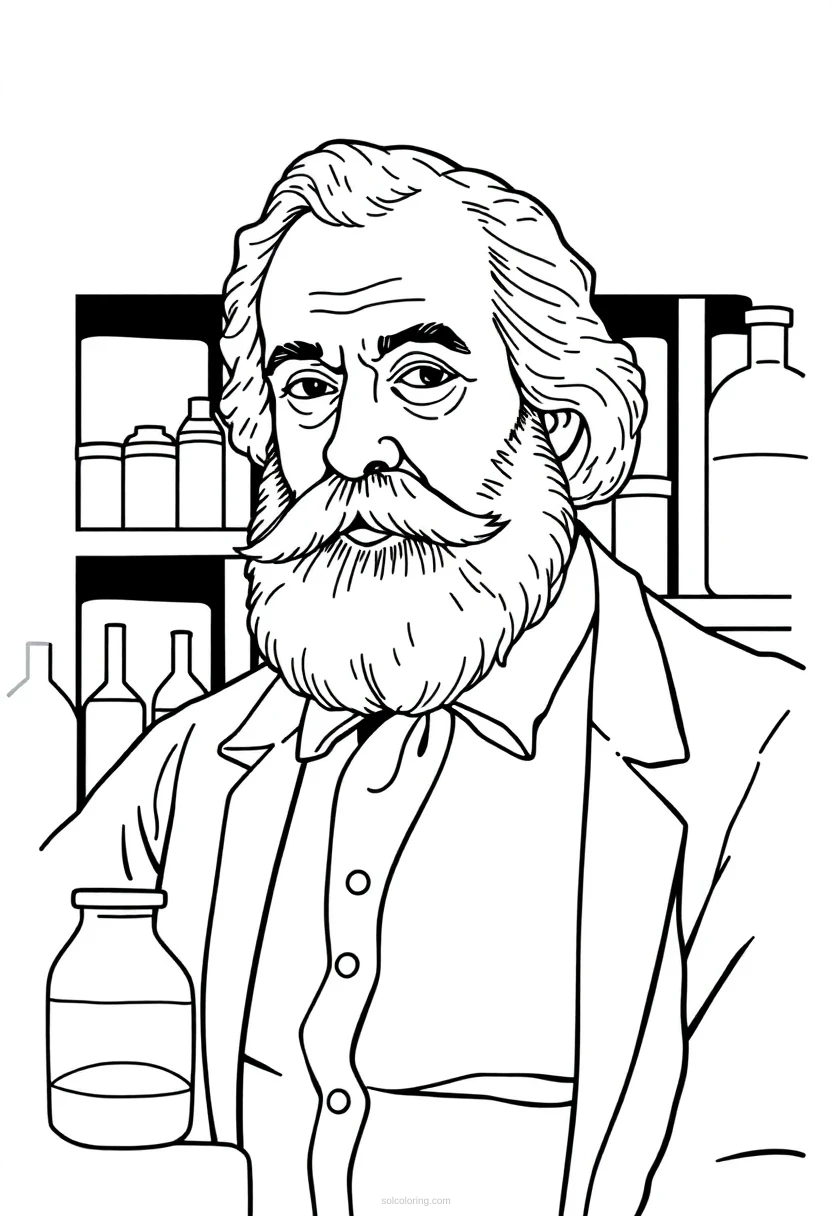
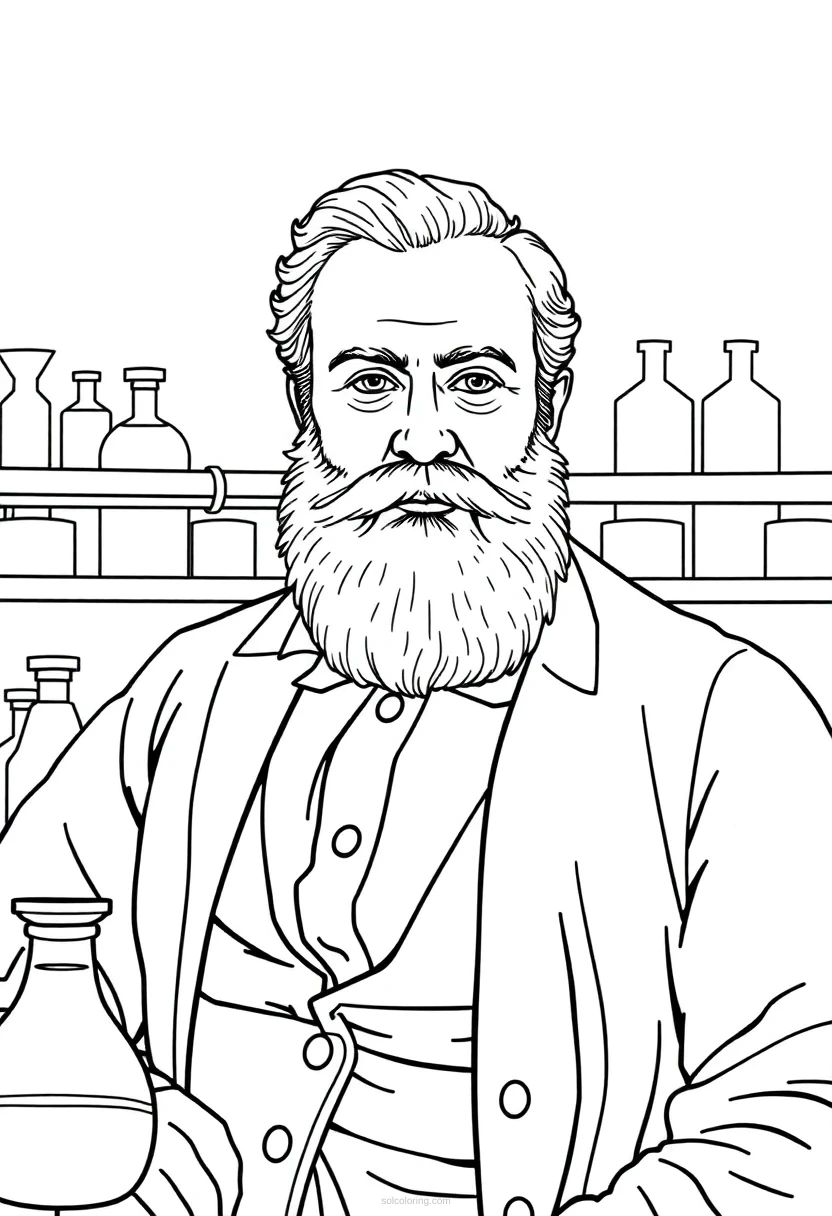
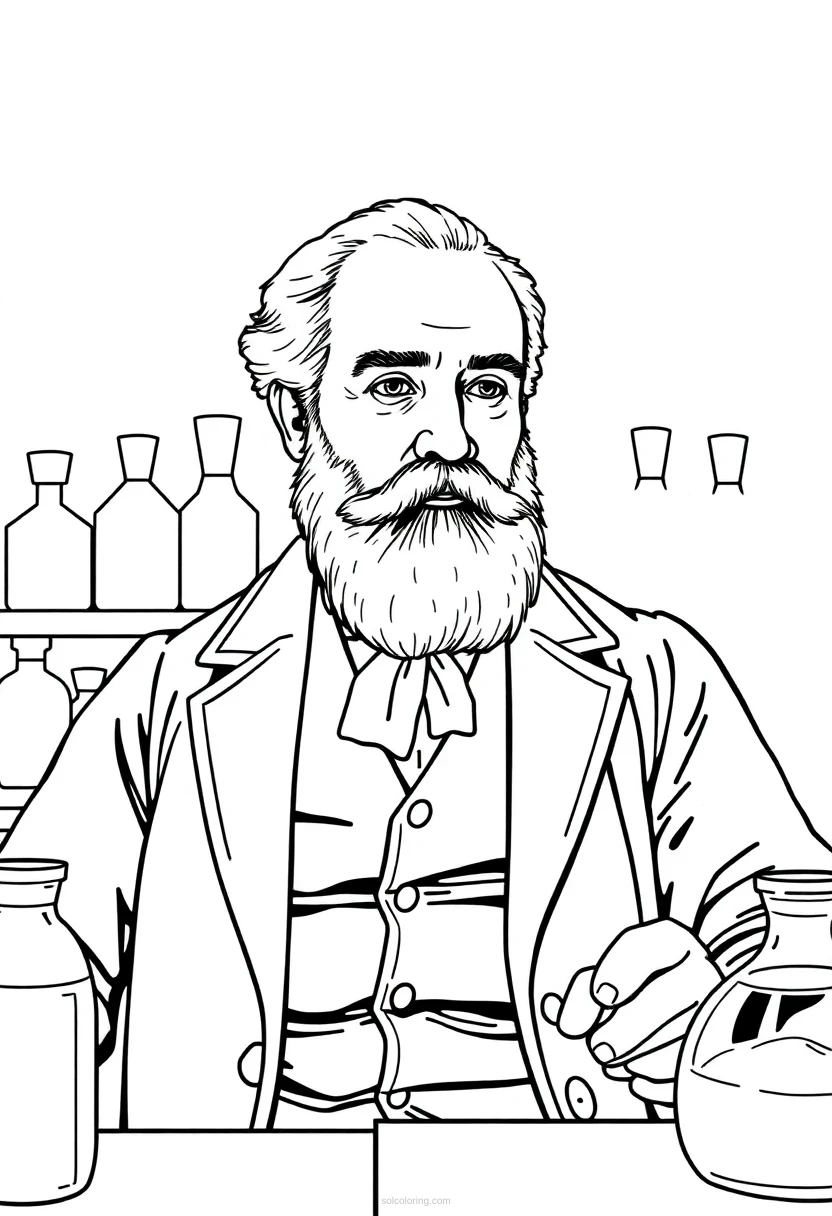
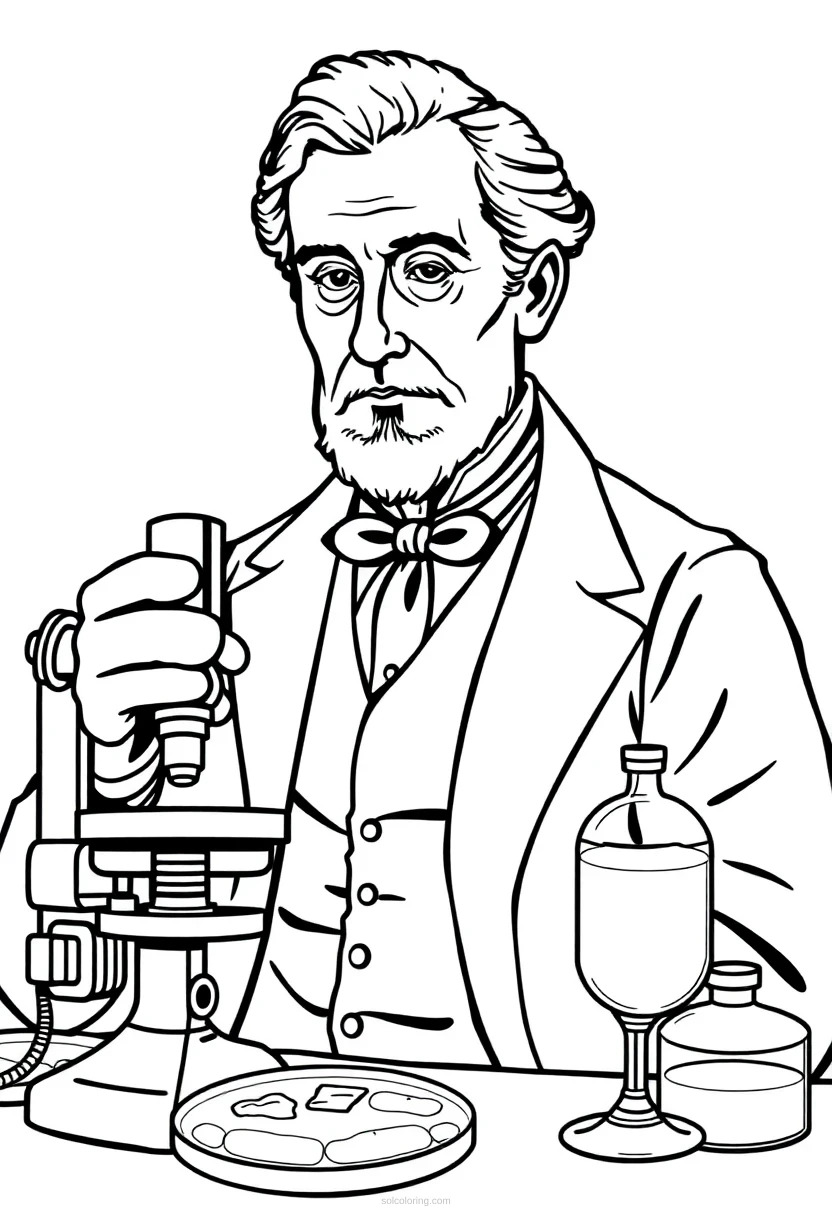
Step into the world of scientific discovery with this free printable coloring page featuring Louis Pasteur in his 19th century laboratory. Pasteur was one of history's greatest scientists, revolutionizing our understanding of germs and disease. His groundbreaking work saved countless lives and led to modern medicine as we know it. This coloring page captures the excitement of his era, showing the instruments, flasks, and workspace where he made his incredible discoveries. Color this scene to learn about the man who proved that tiny invisible creatures called microorganisms cause illness. Perfect for students interested in science history, this free printable coloring page brings the past to life.
Read more →Read less ↑
Choose a style
Did you know?
Fun facts about Louis Pasteur In 19th Century Laboratory
Pasteur had a partially paralyzed left side from a stroke in 1868, but he continued his scientific work with determination and never stopped making discoveries.
The process of pasteurization, used to heat-treat milk and juice today, is named directly after Louis Pasteur and is still one of his most important legacies.
Pasteur's famous swan-necked flask experiment in 1858 proved that microorganisms came from the air, not from inside the liquid itself, settling a major scientific debate.
The boy who received Pasteur's rabies vaccine in 1885, Joseph Meister, lived a long healthy life and later became the gatekeeper at the Pasteur Institute in Paris.
Pasteur was so dedicated to his work that he never took vacations and spent most of his time in his laboratory conducting experiments and writing scientific papers.
About Louis Pasteur In 19th Century Laboratory
Who was Louis Pasteur and why is he so important?
Louis Pasteur was a French chemist and microbiologist born in 1822 who revolutionized medicine and science. He proved that germs cause disease, invented pasteurization to keep milk safe, and created the first rabies vaccine. His discoveries saved millions of lives and founded modern microbiology.
What did Pasteur discover about germs and disease?
Pasteur proved that tiny living creatures called microorganisms cause infections and diseases. Before his work, people didn't understand why wounds got infected or why food spoiled. His germ theory explained disease transmission and led to better hygiene practices in hospitals and homes worldwide.
What is pasteurization and how did Pasteur invent it?
Pasteurization is heating liquid to kill harmful bacteria without ruining the food. Pasteur discovered that heating wine and milk to specific temperatures killed disease-causing germs while keeping the products safe to drink. This simple process revolutionized food safety and is still used today.
What instruments and tools did Pasteur use in his laboratory?
Pasteur's laboratory contained microscopes, glass flasks, test tubes, heating apparatus, and fermentation vessels. He used these tools to grow and study microorganisms. His famous swan-necked flasks proved that germs came from air, not from spontaneous generation as many believed.
How did Pasteur create the rabies vaccine?
Pasteur experimented with weakened rabies virus from infected animals, gradually training the immune system to fight the disease. He tested his vaccine on a boy bitten by a rabid dog in 1885, and it worked. This was the first vaccine created in a laboratory, changing medicine forever.
What challenges did Pasteur face in his scientific work?
Many scientists rejected Pasteur's germ theory at first, believing disease came from bad air or spontaneous generation. He faced skepticism from doctors and the medical establishment. A stroke in 1868 partially paralyzed him, yet he continued his groundbreaking research until his death in 1895.
More Scientists coloring pages
Coloring page FAQs
Are these Louis Pasteur In 19th Century Laboratory coloring pages free?
Yes, absolutely! All our coloring pages at Sol Coloring are completely free to download and print. No signup, no hidden fees, and no login required. Simply visit our website, find your favorite free printable coloring page, and start creating your masterpiece right away.
What age are these Louis Pasteur In 19th Century Laboratory coloring pages for?
These coloring pages are designed for ages 8 to 14, with varying complexity levels. Younger colorers can enjoy simple, bold outlines, while older kids appreciate the detailed scientific equipment and historical accuracy. Everyone can learn while having creative fun.
How do I print these Louis Pasteur In 19th Century Laboratory coloring pages?
Printing is easy. Download the coloring page as a PDF, open it on your device, and print on standard A4 or Letter size paper using any home printer. No special software needed. Choose color or black and white, then grab your favorite coloring supplies.